
By Mary Kelleher / Far North Resilient Communities Charitable Trust
A Northland-based creative education programme that blends stitching, storytelling, literacy, wellbeing and hands-on learning has received a significant boost, with the ANZ Staff Foundation awarding $12,000 to support delivery of Sew Your Story into primary schools.
The funding, awarded to Far North Resilient Communities Charitable Trust (FNRCCT) in the ANZ Staff Foundation’s February 2026 funding round, will support the rollout of Sew Your Story: A Guide for Creative Educators — a practical classroom resource designed to help teachers integrate creativity, storytelling and textile-based learning into everyday curriculum practice.
Read the latest print edition of School News online HERE.
The programme is currently being delivered at Opua School, with two additional schools already expressing interest in participating during the next phase of delivery.
“We are incredibly grateful for the support from the ANZ Staff Foundation,” said programme developer Mary Kelleher.
“This funding allows us to place the guide directly into schools and work alongside teachers as they build confidence using creative, tactile learning approaches that support engagement, wellbeing and cross-curricular learning.”
Five years of development and partnership
The funding milestone represents the culmination of more than five years of development, testing and community partnership, with Sew Your Story building on Kelleher’s 25 years of collage art practice as Handmade Histories.
Sew Your Story was developed through ongoing support from Education Partnership & Innovation Trust (EPIT). This nurtured and strengthened the programme as it evolved from community stitching and storytelling workshops into a structured education model designed specifically for classroom use.
Related School News story: Fostering wellbeing: Practical strategies for supporting students and staff
The newly completed Sew Your Story: A Guide for Creative Educators brings together years of workshop delivery, teacher feedback and creative experimentation into a practical resource for schools.
“It has always been about creating accessible, curriculum linked, entry points for creativity,” Kelleher said.
“Not every child learns best through sitting still, reading or writing alone.”
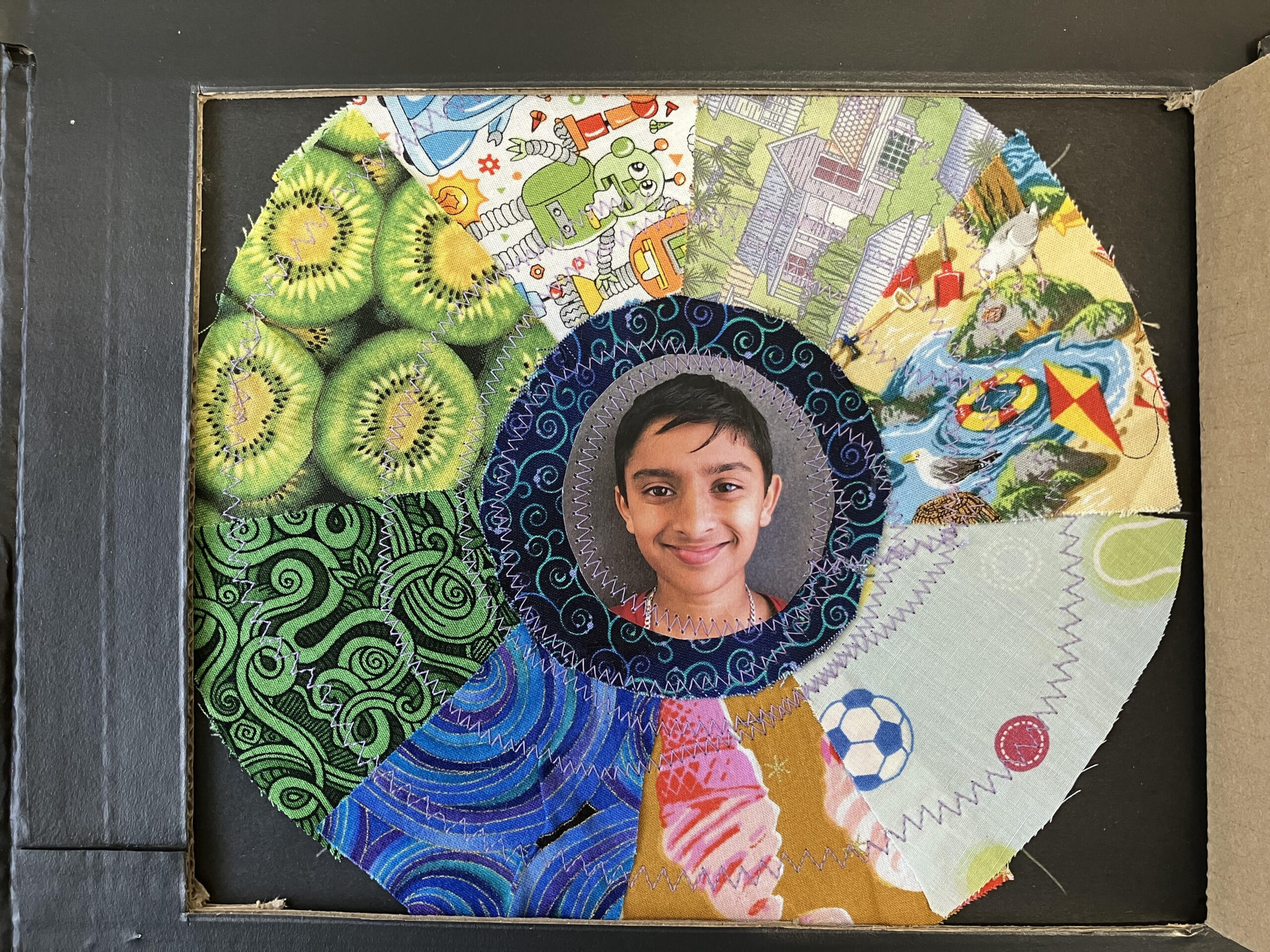
“Sewing and storytelling create another language for learning — one that supports confidence, identity, belonging and connection.”

Learning through making
The programme aligns with growing interest in hands-on, integrated learning approaches that support both academic learning and student wellbeing.
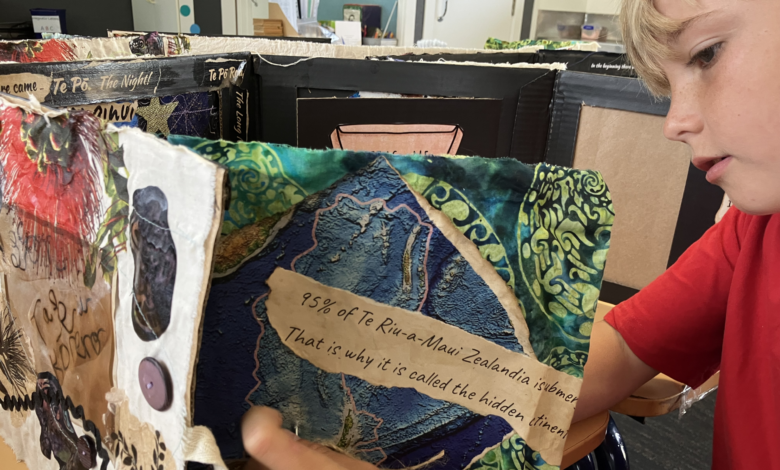
Within Sew Your Story sessions, students explore personal stories, local environments, whakapapa, identity and community connections through tactile creative processes.
Opua School Principal Sandy Blackburn said the school has already witnessed measurable benefits from the programme.
“We have seen positive changes in student engagement, wellbeing, focus and perseverance, along with a growing sense of pride and achievement.”
Kelleher said the programme measures success less by numbers and more by the shifts seen in individual students.
“For us, impact is not simply about participation statistics,” she said. “It is about seeing a change in a child’s belief in themselves and what they are capable of achieving.”
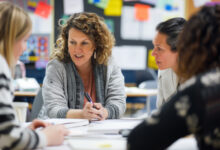
Teacher Aide Kylie Mottl, who has been supporting the programme across two terms and is helping trial Sew Your Story: A Guide for Creative Educators in 2026, said students responded strongly to the opportunity to learn through creative making.
“Students showed courage, perseverance and pride as they explored completely new creative experiences through sewing, collage and storytelling.”
The guide is intentionally flexible, with learning experiences reaching across literacy, the arts, numeracy, social sciences, technology and Aotearoa New Zealand histories, while also supporting the development of key competencies through collaborative, hands-on learning.
Kelleher said one of the programme’s strengths is its ability to create reflective, relationship-based learning experiences.
“In a fast digital world, stitching requires patience, focus and reflection. Conversations emerge naturally while hands are busy creating.”

Supporting teachers alongside students
A key focus of the ANZ-funded rollout is supporting educators themselves.
The programme works alongside both students and teachers, helping educators build long-term confidence in creative facilitation and curriculum-linked creative learning.
“100 percent of the ANZ Staff Foundation funding is being directed to participating schools for teacher and teacher aide release time.
“This aspect of the funding is particularly important because it enables educators to participate alongside students and supports the long-term sustainability of the learning within schools.”
The guide includes practical classroom frameworks, adaptable activities, reflection prompts and curriculum-linked approaches that teachers can continue using independently.
“Our aim is not to create a one-off workshop experience,” Kelleher explained.
“It’s about helping schools embed creativity into everyday teaching practice in ways that feel achievable, inclusive and sustainable.”
The Opua School delivery is currently serving as a live working model for the next stage of programme development, with ongoing refinement taking place in response to classroom experiences and teacher feedback.
Mottl said the programme has helped create a safe and welcoming environment where students have grown in confidence, creativity and connection.
Space for one more school
Thanks to the ANZ Staff Foundation funding, Sew Your Story now has capacity to expand into one additional primary school during this funded phase in Northland / Te Tai Tokerau.
Schools interested in participating can contact Mary Kelleher directly at [email protected].
Kelleher believes the growing interest reflects a wider desire within education to reconnect learning with creativity, identity and meaningful human connection.
“Children are carrying a lot emotionally and socially,” she said.
“Creative learning gives students space to reflect, express themselves and feel connected — not only to curriculum learning, but also to each other and to their own stories.”