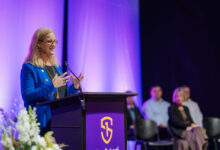


The Aotearoa Educators Collective (AEC) said the latest ERO report on students learning in alternative settings should be a wake-up call for government, agencies, ERO and the wider education system.
The report paints a deeply concerning picture, the AEC said: more young people are becoming disconnected from mainstream schooling, too many are waiting months for alternative provision, and far too many are leaving without meaningful qualifications or pathways.
Read the latest print edition of School News online HERE.
But AEC said the report also exposes a bitter irony.
ERO is recommending that schools do more to retain at-risk students in mainstream education, while at the same time introducing a new style of school reporting that risks publicly disadvantaging the very schools that are doing exactly that.
“Schools that hold on to young people with complex attendance, learning, behavioural, mental health and neurodiverse needs should be supported, not potentially punished through simplistic colour-coded ERO Report snapshots,” said AEC spokesperson Claire Amos.
Related School News article: Schools are being denied support for learners with the highest needs
“If a school keeps enrolling, welcoming and working with the students other places have pushed away, its attendance and achievement data may look more complex.
“That should be understood as evidence of moral purpose and community commitment, not treated as a reputational liability.”
AEC is concerned that ERO’s new reports, with upfront visual judgements on attendance, progress and achievement, risk creating perverse incentives.
It said that schools may feel pressure to protect their public profile rather than take on the hardest work. This is especially troubling when ERO’s own report identifies that existing accountability settings can make it easier for schools to exclude, refer or discourage high-needs students than to provide the intensive support they require.
The report is clear, it said, that students entering alternative settings are not simply “choosing not to attend”. Many have experienced poverty, trauma, housing instability, bullying, neurodivergence, unmet learning needs, mental health challenges, stand-downs, suspensions, non-enrolment and repeated school moves.
Māori students are significantly over-represented.
AEC said the report also sits awkwardly alongside the government’s wider education reform agenda.
“ERO is calling for flexible, intensive, relationship-rich provision that keeps young people connected to learning.”
“Yet the government is pushing through a more standardised, subject-bound senior curriculum and the removal of NCEA, the one qualification framework that, while imperfect, has allowed schools to design flexible and responsive pathways for diverse learners.”
AEC said this is a fundamental contradiction.
“You cannot say you want to re-engage disconnected young people, while simultaneously narrowing curriculum, reducing assessment flexibility and building a system around sameness.
“The young people in this report are telling us that one-size-fits-all schooling has already failed them. The answer cannot be even more one-size-fits-all schooling.”