

By Katrina Evans, Archgola NZ
The traditional approach of relying on temporary shade solutions is gradually being replaced by more permanent, multifunctional structures. Schools that invest in canopies not only create safer and more comfortable environments for students but also future-proof their outdoor spaces for years to come.
The need for outdoor coverage in schools
A well-designed canopy does more than protect students and staff from the sun and rain—it enhances the overall school environment and has become a crucial part of school planning.
Key advantages include:
- UV and weather protection – High-quality canopy structures block harmful UV rays and provide reliable shelter from rain, ensuring outdoor spaces are usable year-round.
- Versatile learning spaces – With more emphasis on open-plan learning, covered outdoor areas allow students to transition between indoor and outdoor learning seamlessly.
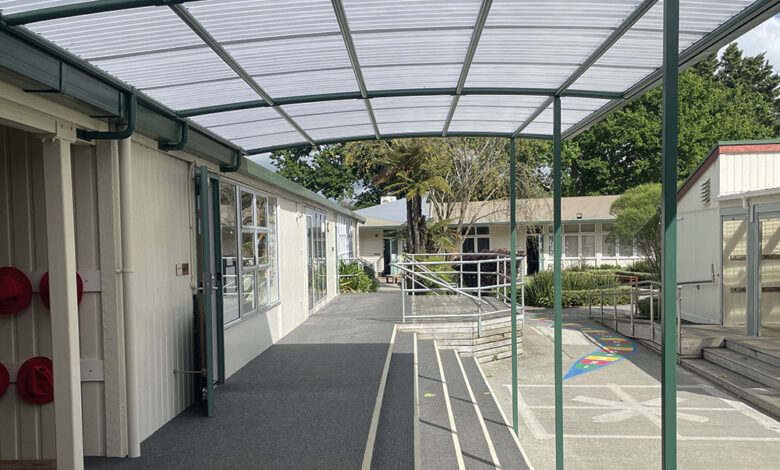
Common locations for covered outdoor spaces in schools include the front of classrooms and covered walkways. Another popular location is a staffroom extension, allowing staff to spread out and have a sheltered space during breaks.
Related School News article: Take it outside: Outdoor learning areas for year-round education
Tailoring canopy designs to school needs
No two schools are the same, and the structures needs to align with the project requirements and building type. Fortunately, canopies designed by Archgola are customised so schools can create outdoor spaces that seamlessly integrate with their existing infrastructure while providing optimal coverage.
For example, straight canopies work well for shorter spans, making them ideal for long walkways or for mounting on the front of classrooms. Whereas arched canopies allow for wider spans of up to 6.5 meters with fewer posts, making them better suited for building-mounted installations.
By investing in a quality shade solution, schools can ensure that learning extends beyond the classroom, making the most of the outdoor potential that the school has to offer.