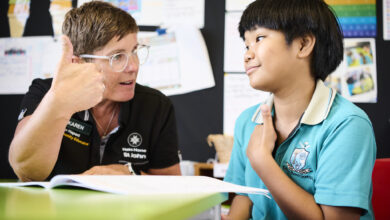


I was born in Matamata but spent much of my childhood on Great Barrier Island (Aotea). I was also a self-driven learner for part of my education as I did correspondence school for a few years on the island.
Those early experiences shaped me into the person and leader I have become.
Read the latest print edition of School News online HERE.
Being part of a small community, relying on and supporting each other becomes essential. Special friendships and bonds are formed from this, so I continue to enjoy the strong sense of community that can be formed in a school.
I have been an educator for 32 years and it is a career I absolutely love. I have been the Principal of Brookby School for the past five years, following many years as Deputy Principal at Maraetai Beach School.
From the outset, I want to make an important point: we need to celebrate more positive stories in education. I believe the culture at Brookby School is one of those positive stories.
Brookby School is unique in that it is a small semi-rural school in South Auckland. We have students attend from outside the area with families looking for the small semi-rural school experience that we offer.
We have a saying which is ‘Once a Brookby Kid, always a Brookby Kid’. This means that if you were a student, teacher, parent or grandparent of the school at any stage, then you will always be part of this special community.
You are always welcome and we value you coming back at any time.
We recently celebrated our 150th anniversary; the positive vibe and turnout was amazing. Everyone had a Brookby story about how the school helped shape their life.
Culture is talked about often in education, but the real question is whether the words match what is actually happening day to day. Schools have visions and values displayed on walls and buildings throughout the school environment, including at Brookby School.
When I decided I wanted to make that next step as Principal, I challenged myself to ensure that the words matched the actions. I wanted to create an environment where students and staff come to school feeling positive, excited and motivated, and where they can focus on teaching and learning.
Too often we hear about teachers feeling burnt out, buried in paperwork and overwhelmed.
When I reflect on my own journey through education, I realise that at times I was one of those teachers.
I would spend evenings and weekends trying to keep on top of the never-ending list of tasks. Looking back, I am not sure many of those extra hours actually improved my lessons or student outcomes.
Isn’t it better to arrive at school each day well-rested, motivated and excited for the day ahead?
I’m not suggesting that we take the easy road, be underprepared, or fail to provide the curriculum every student deserves. This is where leadership becomes so important.
The question becomes: How can I, as Principal, ensure my staff are motivated while also ensuring student needs are met?

Here, prioritising becomes critical. Leaders must be brave enough to say no to things that might be beneficial for the school but could dilute other initiatives or overwhelm staff.
We are in a time of constant change in education, with a curriculum that is being refreshed, or, more accurately, significantly changed.
So how does this look in practice at Brookby School?
Deliberate planning
It starts with strong leadership. The Deputy Principal and I spend significant time planning the year ahead—almost day by day and week by week.
It needs to be manageable for everyone: students, staff and our community.
Too much happening in one particular week can lead to unnecessary stress and challenges.
When something new is proposed, we ask important questions: Why are we doing this? Do we have the capacity? Is there something we should remove or adapt to make it manageable?
Deliberate planning also involves constant review and being willing to adjust the plan when required. Over time, this approach has helped us develop strong ‘blueprints’, making planning easier from year to year.
Leading and modelling
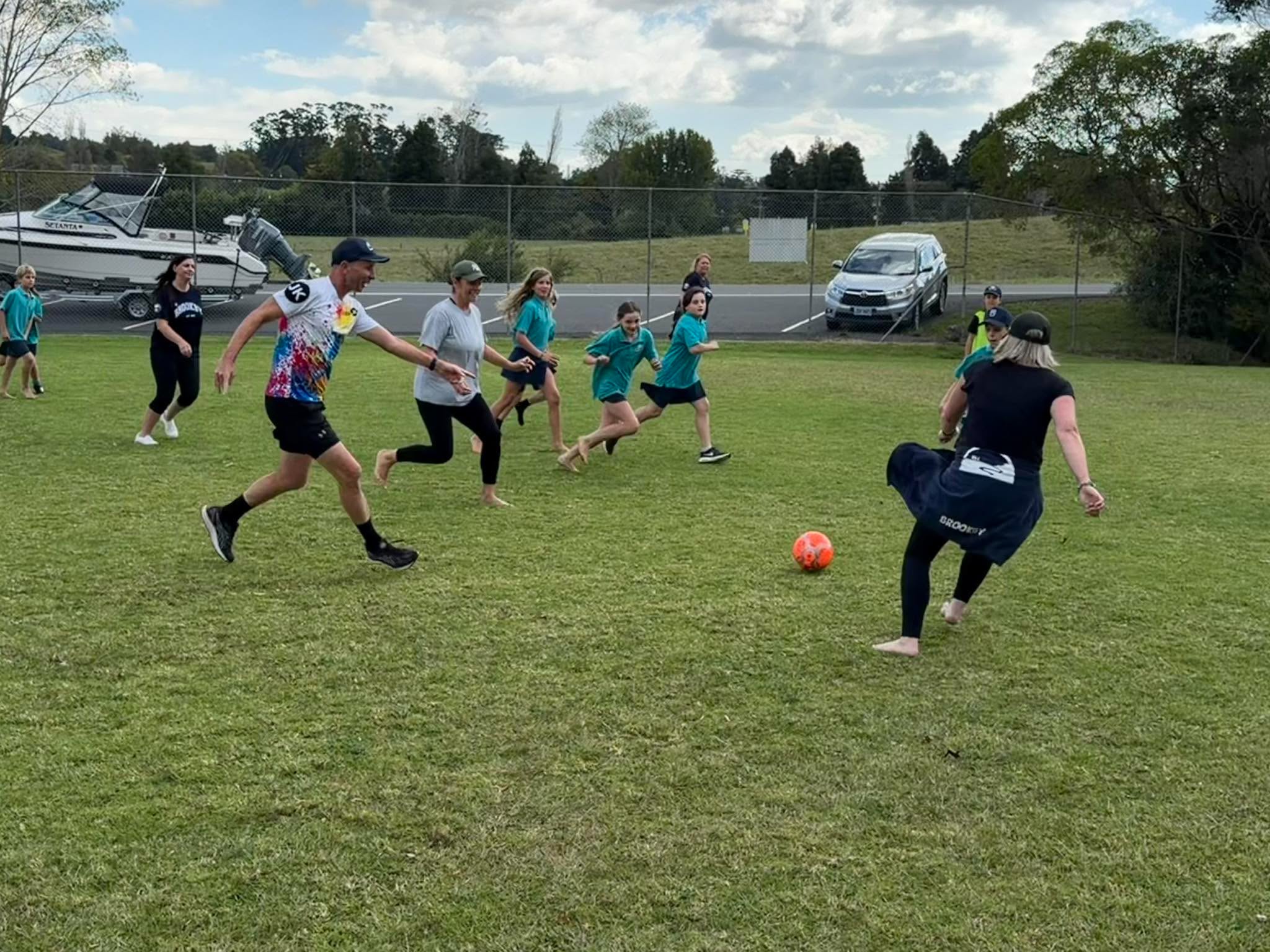
My leadership style, which is particularly important in a small school, is to get involved.
I help organise events and I prioritise being a visible and engaged leader. I spend time in the playground, classrooms, and outside during pick-up and drop-off, both before and after school.
This is where you truly learn about your school. You find out what is working well and what needs improving.
I also believe strongly in walking the talk. I encourage students to challenge themselves and step outside their comfort zones.

Recently, I completed IRONMAN New Zealand. I took the school along on that journey with me and shared that I had to learn to swim properly.
I talked openly about the highs and lows of training and the commitment of this. My achievement was celebrated by the whole school and community, and the spin-off conversations around taking on big challenges were amazing.
I was fortunate to be awarded the Tony Jackson Scholarship, which supported me in achieving this challenge. Tony Jackson completed 28 New Zealand Ironmans and was known for constantly giving back. He coached and encouraged many others to achieve their goals.
This became a powerful example to share with students, staff and the community about pushing yourself and aspiring to something that initially might feel impossible.
As I was competing in the event my thoughts went to Tony’s message of ‘Nothing is impossible…to the willing mind’. My biggest joy is seeing students take on their challenge and be successful.
I have often seen students go from one success to the next, as the confidence of achievement leads them to take on the next challenge.
Have fun and celebrate success
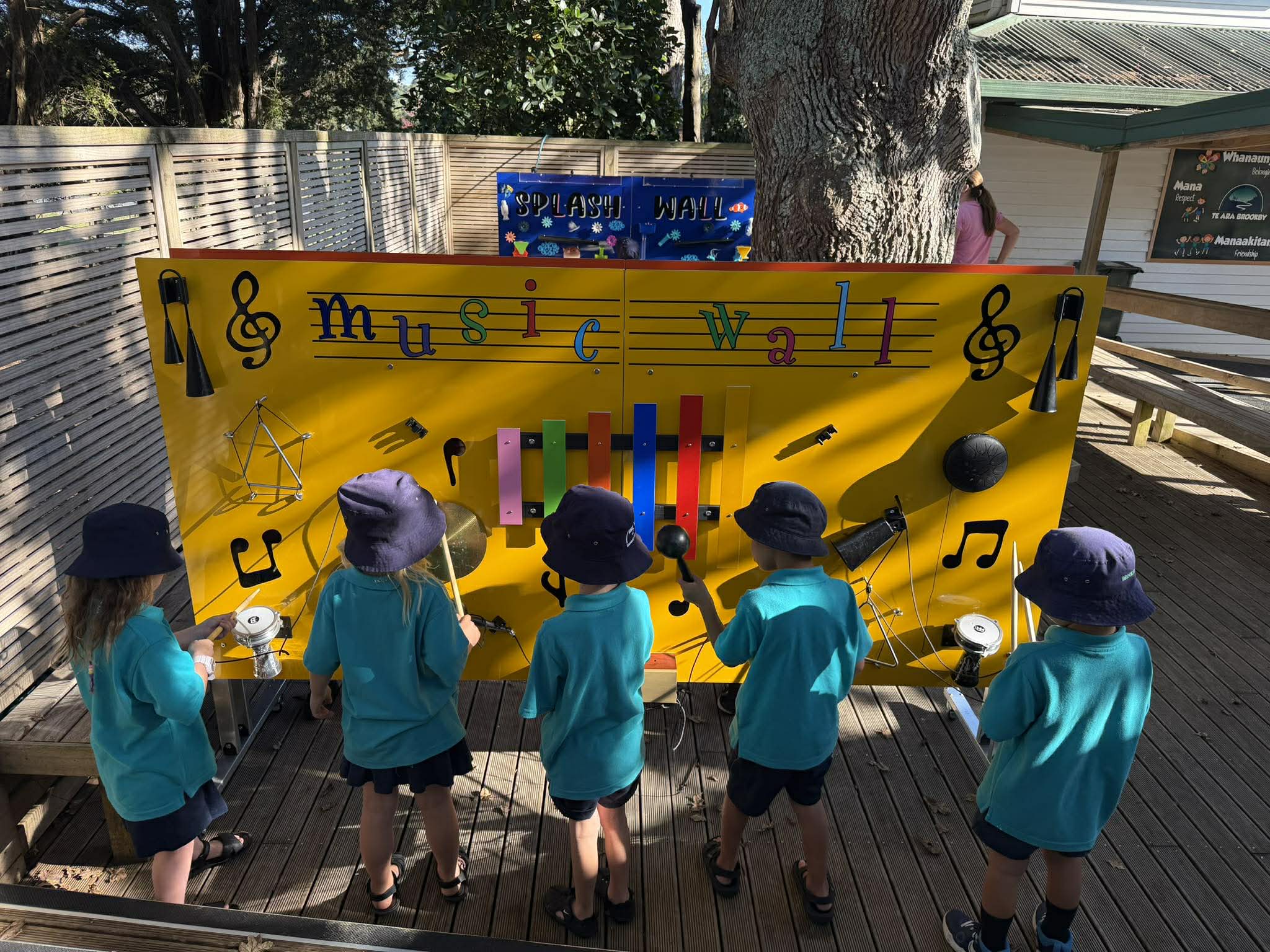
Schools should have a strong sense of fun. If students and staff want to be at school, we are already well on the way to helping students succeed.
In our staffroom we try to avoid constant ‘school talk’. Instead, we talk and laugh together and get to know each other beyond our professional roles.
We also think carefully about what students genuinely enjoy. One example is starting every Friday with Jam Jam, which has become a much-loved tradition. We also have a strong house competition that encourages participation, pride and teamwork.
Our school assemblies celebrate student achievements and include success beyond the academic. We have student-written productions, with every student performing on stage at a real theatre. We run play-based programmes and provide resources that make the start of the day a real highlight for our junior students.
Each and every day there are students in my office sharing their learning and achievements. I love that they walk out with a smile on their face, with the prized gold Principal sticker.
We also believe in creating memorable experiences beyond the school gates.
Each year we take our students off-site for cross country where they run on a fun course with mud, sheep and hills—something very different from a typical school course.

Our annual Ag Day is well known and could almost be described as ‘New Zealand famous’ within our community. It is a fantastic day full of activities, animals and fun for students and families alike.
Communication and clear direction
I try to be very clear about what is important at Brookby School. Our focus is teaching and learning.
Clear communication helps staff understand priorities and ensures that energy is directed toward what truly matters for student success.
If we keep changing direction and priorities it creates confusion and frustration. It is better to do a few things really well rather than many things at a surface level just to tick boxes.
Again, leaders need to be brave and say “no” or “not yet” to certain initiatives or ideas if they are not the right fit at the time.
Don’t stress the small stuff
One thing experience has taught me as a leader is not to worry about every little thing. Each day brings countless emails, requests from the Ministry and curriculum expectations. Most things can wait.
It is important not to let your own stress become school-wide stress.
The questions I ask often to myself: Are the students, staff and community happy? Are students learning and engaged?
At Brookby School, culture is not what we say—it is whether every student, every staff member, and every whānau feels they truly belong.
When I step outside my office, I do so with a positive mindset. Often, I will stop and talk with one of our students. That simple moment brings me back to the core of why we are all here—supporting young people to learn, grow and thrive.

I am in a privileged position leading a fantastic school. I have a great team of dedicated educators who are treated as professionals.
I listen to our students and community, and they tell us they love our school, our teachers and our learning programmes.
Culture is crucial and requires deliberate actions that go far beyond the words written on school buildings or classroom walls. It starts with the leadership of the school.
Culture is not what we say—it is what we do, every day.
At Brookby School, that means creating an environment where people feel valued, supported and inspired to give their best.
When culture is strong, everything else—learning, wellbeing and achievement—follows.
That is the kind of school we are committed to building, every single day.