Opinion: Teaching students to think is our best preparation for a post-AI world
A specialist teacher shares his perspective on teaching critical thinking alongside AI use to equip students for the future.

By Paul Le Lievre
In December I spoke at the Cambridge Schools Conference in Bali alongside educators from Singapore and the Philippines. We presented to 400 delegates from nearly 40 countries on how our schools are helping students apply their learning to real-world challenges.
It was humbling to represent New Zealand on this stage, and I was excited to share what we’ve been doing at Pinehurst School as I believe it holds a key to preparing our young people for what comes next.
That key is Cambridge Global Perspectives, and after nearly a decade of teaching it, I’m more convinced than ever that this approach to education is precisely what our students need as they head into a new school year and beyond.
Read the latest print edition of School News online HERE.
Here’s the thing about knowledge today: it’s essentially free. Any fact, figure or formula is seconds away on your phone. The question isn’t whether students can access information, it’s whether they know what to do with it. Can they evaluate sources? Can they identify bias? Can they construct an argument, defend a position, or challenge their own assumptions? These are the skills that will matter when AI can generate essays and code in seconds.
Cambridge recently surveyed over 3,000 teachers and nearly 4,000 students across 150 countries. The findings confirmed what I’ve been seeing in my classroom. Students and teachers alike rated thinking and research skills just as highly as subject knowledge when it comes to preparing for the future. Yet here’s the striking disconnect: only 37 per cent believe subject knowledge is important for life after formal education. Students know they need more than facts to succeed. They’re asking for skills that will help them navigate uncertainty, adapt to change, and solve problems that don’t yet exist. To learn how to think, instead of being taught what to think.
This resonates deeply with what’s happening in New Zealand right now. As we reshape our secondary qualifications and strengthen pathways between school and employment, there’s an opportunity to ensure students leave school not just with credentials, but with genuine capability. Employers tell us they want graduates who can communicate, collaborate, and think on their feet. The New Zealand Council for Educational Research (NZCER) found that fewer than a third of employers believed NCEA worked well for them, largely because qualifications don’t always reflect what students can actually do.
Cambridge Global Perspectives addresses this head-on. It’s not social studies. It’s not memorising content for an exam. It’s a rigorous, skills-based program where students learn to research, evaluate evidence, construct arguments and communicate their findings. At Year 11, our students produce 2,000-word fully argued essays with proper citations. By Year 13, they’re completing 5,000-word independent research projects on topics they choose themselves. That’s third year university-level work.
I think of Jack, who is now at the University of Sydney studying for a Conjoint Degree in Law and Commerce. He recently wrote to tell me that his tutors kept asking where he learned to write such well-structured essays with proper citations. His answer? Cambridge Global Perspectives. He urged me to encourage more students to take it because he’s experiencing firsthand how those skills translate beyond school.
Then there’s another student I taught for four years who has Asperger’s. He didn’t look me in the eye once during that time. But he challenged himself to complete an eight-to-ten-minute presentation in front of his classmates, a requirement of the course. He taught himself to engage the audience, to gesture at the screen, and to project confidence he didn’t naturally feel. The confidence and self-worth he gained before heading to university is immeasurable.
Related School News article: What transferable life skills should we be teaching?
This is what preparation for the future actually looks like – developing resilience, self-management and the ability to communicate ideas clearly. The World Economic Forum tells us that nearly half of all workers will need reskilling by 2027. AI-skilled workers are commanding a 56 per cent wage premium. But that premium exists precisely because AI struggles with what humans do best: ethical reasoning, contextual judgment, and understanding nuance.
We use AI as a research tool in our classes. Students learn to craft effective prompts, to find academic sources across different perspectives, to filter the useful from the unreliable. But AI is a tool, not a substitute for thinking. The students who will thrive are those who can work alongside AI while bringing human judgment, creativity and critical analysis to the table.
As head into a new school year, I believe the conversation about education reform needs to include how we develop these foundational capabilities. Knowledge will always matter, but it’s about the scaffolding, not the whole building. What we construct, how we think, communicate and adapt, that’s what will carry our young people forward. They are more resourceful than they’re often given credit for. We just need to give them the tools to prove it.
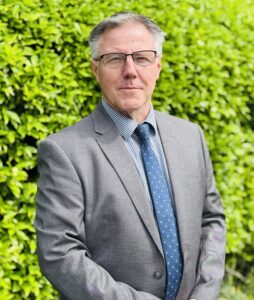 This article was written for School News by Paul Le Lievre, teacher at Pinehurst School. Paul represented New Zealand at the Cambridge Schools Conference in Bali in December 2025, where he presented to 400 delegates from 40 countries, on how his school is helping students apply their learning to real-world challenges.