
From fusion energy to Solve for Tomorrow: helping students build ideas without a roadmap
In partnership with Samsung Solve for Tomorrow
Innovation rarely moves in a straight line. The ideas that look obvious in hindsight usually required many rounds of testing, questioning and adjustment before they realised their potential.
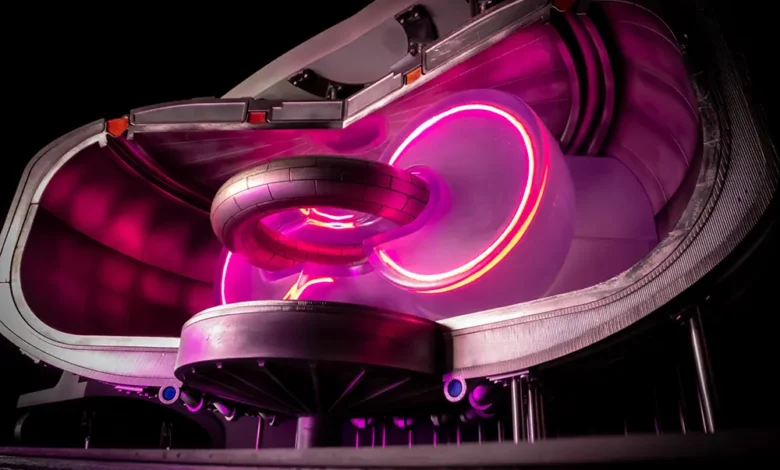
That process is familiar to Dr Ratu Mataira, founder of OpenStar and Samsung Solve for Tomorrow VIP Judge. OpenStar is a Wellington-based fusion energy company working on technology that could help power the future. Its work is ambitious and, for many, has long been considered impossible. In 2024, the company developed the first plasma in its prototype reactor, capturing global attention and marking an important step towards its goal of creating nuclear fusion power.
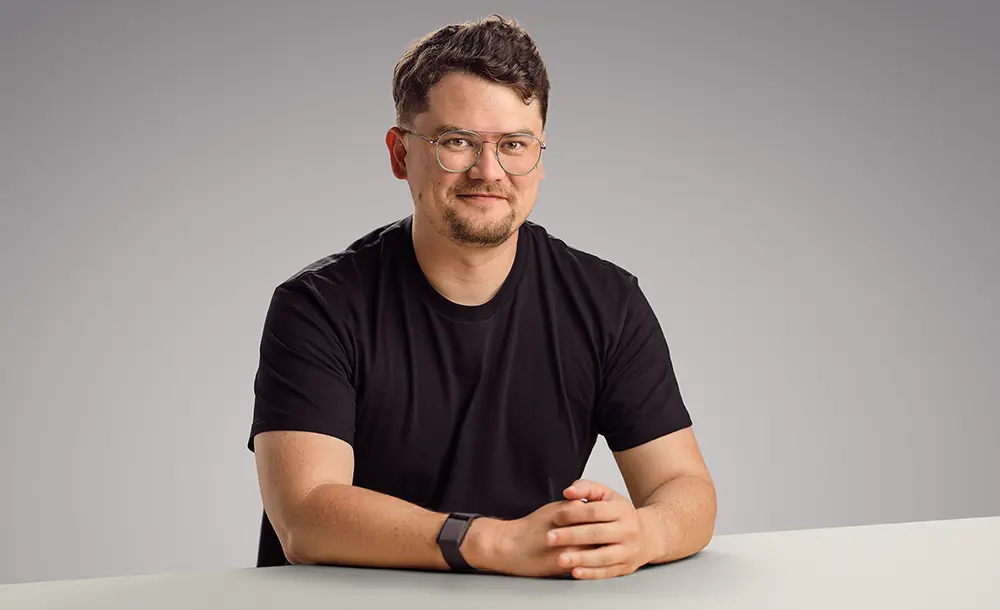
Every step in that kind of work depends on evidence, modelling, engineering decisions and a willingness to keep improving an idea as new learning emerges. Dr Mataira shares that it’s a useful reminder for students that ambitious ideas do not need to arrive fully formed.
“It’s certainly true when working on a complex energy challenge – we have four stepping stones on the way to reaching the fusion power plant, and we’re only at step one so far,” says Dr Mataira.
“It’s a snowball effect where we’re learning more and more along the way, and this is also true for young people developing their own passion projects.”
That iterative nature of science is one of the reasons Dr Mataira is part of the judging panel for Solve for Tomorrow, delivered by Samsung in partnership with the Museum of Transport and Technology (MOTAT) and Technology Education New Zealand (TENZ). The competition gives students in Years 7 to 13 a practical way to use STEAM learning and design thinking to work on real-world challenges, building the confidence to keep shaping an idea as it develops.
Some students will begin with a clear problem they want to solve. Others might start with a rough observation from school, sport, home or their community. A solution may take several attempts to explain, test or refine, using intuition to guide the way.
“In my experience, to be world-leading and cutting edge, intuitive reasoning is a critical component for growth. Doing something that no one has done before means we’re building our own ladder, making our own experiments, and charting our own path towards our goal.”
To kickstart students’ thinking, Solve for Tomorrow gives students broad challenge areas across technology, community, sustainability, sport and wellbeing. The goal of the competition is to inspire Kiwi students to change the world, and the process of developing their idea helps students build skills for life. They learn to ask sharper questions, use evidence, think about feasibility, communicate clearly and respond to feedback – crucial as they progress into their chosen fields.
Supported by a teacher, a classroom can be the place where a student first realises an idea is worth taking further, where a rough concept gets challenged constructively, or where feedback helps turn a broad thought into a clearer plan.
“From someone outside of the education system, I see that role as incredibly important to New Zealand’s future innovation culture,” says Dr Mataira.
“As a judge, I will be looking out for entries that show curiosity, clarity and persistence. The strongest ideas will be those where students have taken the problem seriously, tested their thinking and shown how their solution could work in practice.”
Solve for Tomorrow gives students a reason to stay with an idea long enough to improve it, and a way to see their ambitious thinking taken even further.
OpenStar’s work shows that globally significant questions can be explored from Aotearoa New Zealand. For students, the same principle applies. Their ideas may start in a classroom, on a sports field, or at home, but can travel from their community to the world.
Final entries for Solve for Tomorrow close on 18 September 2026. The competition includes a prize pool of $24,000 in cash and Samsung technology for winning students, their teachers and schools.
To learn more, visit www.samsung.com/nz/solvefortomorrow.
