Every minute matters in school cardiac emergencies
We speak to Hato Hone St John about how to ensure your school staff and students are equipped to react in a cardiac emergency

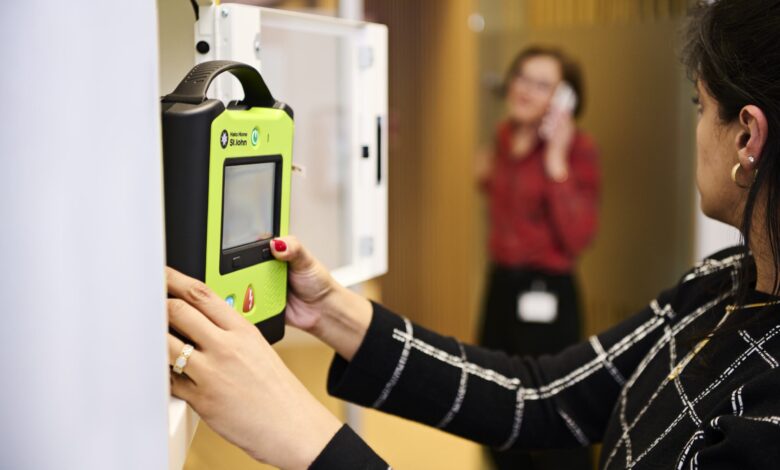
Without prompt intervention, fewer than one in ten people survive an out-of-hospital cardiac arrest. By contrast, when used within the first three to five minutes, AEDs can increase survival rates by up to 70 percent.
When every minute matters, schools have a critical role to play. In a setting where students, staff, parents and visitors gather each day, having an Automated External Defibrillator (AED) on site has the potential to save a life.
Read the latest print edition of School News online HERE
We spoke with Simon Barnett, Head of Training and Medical Products, Hato Hone St John about how to ensure your school is equipped to react in a cardiac emergency.
What should schools consider when choosing an AED?
It’s essential to consider its ease of use, reliability and accessibility. It should have clear voice prompts and visual instructions to help the user in the event of a sudden cardiac arrest.
It should also be considered whether the device has paediatric capabilities especially in primary school environments. Lastly, consider the cost of ongoing maintenance, such as the cost and life of the replacement pads and batteries to ensure that the device is going to meet your requirements.
Schools can be big, busy places with hundreds or even thousands of staff and students. Where should AEDs ideally be located within a school to ensure they can be accessed quickly in an emergency?
Defibrillators should be placed in highly visible and easily accessible locations. Areas with high foot traffic could also be suitable such as the gymnasium, assembly hall or cafeteria. Schools should also consider placing them near entrances to allow for quick access.
Ensure the defibrillator is mounted with clear signage and that all staff are aware of the location/s. Preferably, it should be placed in an unlocked cabinet.
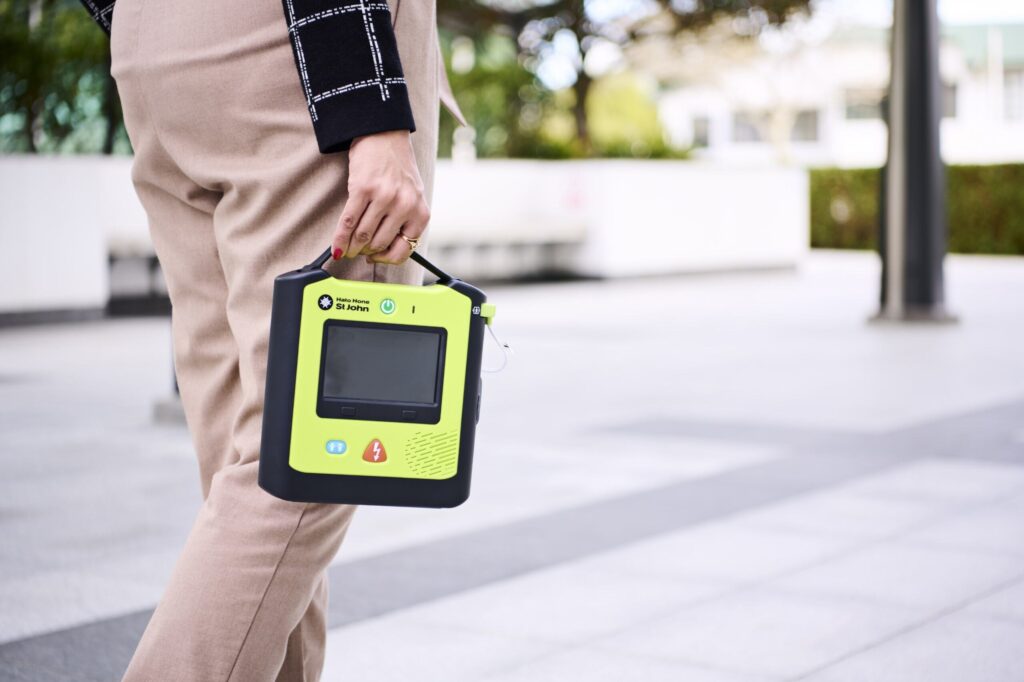
Sometimes, people can be hesitant to act in an emergency if they feel unsure of what do to. How can schools help teachers and staff feel confident responding to a cardiac emergency, and what types of training are recommended for school communities?
Schools can build staff confidence in responding to cardiac emergencies by focusing on practical, hands-on training that covers recognising early warning signs and following basic life support action plans, including CPR and AED use. In New Zealand, there are a range of suitable options, including general first aid training as well as child-focused courses for professionals and the wider community.
Related School News story: Hope for the best, plan for the worst: Essential first aid
Incorporating training within the school programme for our tamariki to learn the basics is also a great way to boost school community confidence. When choosing training for staff, it’s worth considering time commitments, alignment with the latest NZQA standards, and planning for refreshers every two years so skills stay current and staff feel ready to act.
An AED can only be effective it is properly maintained. What maintenance and servicing practices should schools follow to ensure their AEDs remain ready for use?
Schools can keep their AEDs ‘rescue-ready’ by carrying out simple, regular checks. This includes making sure the device’s status light is okay, and that the pads and batteries are within their expiry dates.
It is helpful to keep a quick log of checks, and to set reminders for when pads and batteries need replacing , which is typically every few years or after use. Always be sure to follow the manufacturer’s guidance specific to your AED and consumables.