

Professional learning and development (PLD) is not a ‘nice to have’ in education, it is essential.
As classrooms continue to evolve, so too do the expectations placed on teachers. From changing curriculum priorities to the rapid rise of digital technologies and an increasing focus on student wellbeing, educators are being asked to do more than ever before.
This story first appeared in the Term 2 edition of School News. Read it online HERE.
High-quality PLD helps bridge that gap, giving teachers the skills, confidence and practical tools they need to support every learner in their care.
Done well, PLD goes far beyond one-off workshops or box-ticking exercises. It creates space for teachers to reflect on their practice, explore new ideas, and build on what already works in their classrooms.
Related School News article: Examining the evidence: Giving students the best chance at success
Whether it is gaining confidence with emerging technologies, strengthening subject knowledge, or finding new ways to support student wellbeing, effective PLD can lead to meaningful, lasting change.
Here’s the kicker: research suggests that a great teacher can add the equivalent of several months of extra learning in a single school year. When teachers feel supported and capable, students benefit too.
One of the biggest shifts in recent years has been the growing role of technology in education. Schools are investing in digital tools such as interactive displays, artificial intelligence, and cloud-based platforms, but their impact depends on how confidently they are used.

Making the most of PLD
Targeted upskilling is key, helping educators integrate these tools in ways that genuinely enhance teaching and learning rather than overwhelm it.
At the same time, curriculum-focused PLD remains a priority. Opportunities to deepen knowledge across areas such as English, STEAM, AI, and outdoor learning allow teachers to stay current and bring fresh ideas into the classroom.
Related School News article: AI tools for teaching and learning: Embracing technology to enhance workflow
Increasingly, schools are also looking for PLD that can be tailored, aligning with individual career goals while supporting broader school priorities.
Universities and professional providers are expanding what is on offer, from short courses and workshops to postgraduate study, micro-credentials and leadership programmes.
Alongside this, a busy calendar of conferences and events continues to connect educators with new thinking and best practice from across the sector.
In this feature, we explore some of the PLD opportunities available to teachers and schools across Aotearoa.

Te Poipoi Kaiako, delivered by Tātai Aho Rau Core Education, is a Ministry of Education funded national programme designed to support mentors and mentees to learn alongside one another, fostering both professional learning and strong relational connections.
A key strength of the programme is its ability to bring together kaiako from early learning, primary, and secondary settings—an approach that remains relatively uncommon in PLD.
This cross-sector PLD approach enables participants to recognise shared challenges and strengths, while building greater empathy and understanding across different contexts. Opportunities to connect, kōrero, and share practice beyond one’s own setting are consistently highlighted as a valuable and refreshing aspect of the programme.
The programme offers a range of flexible learning opportunities, including face-to-face and online workshops, webinars, online modules for mentors and mentees, and one-to-one mentoring.
A ‘dip in and out’ model allows participants to engage in ways that suit their needs and availability, with resources housed in the Ministry’s learning management system so they can be revisited at any time.
Workshops follow a consistent structure, supporting familiarity and coherence, while introducing different kaupapa to extend and build on prior learning. This balance allows participants to both consolidate and deepen their understanding over time.
As a national programme, Te Poipoi Kaiako is not designed to be tailored to individual school priorities in the same way as school-based PLD.
However, it is intentionally adaptable, encouraging participants to engage with the learning through the lens of their own context and apply tools, strategies, and resources in ways that are meaningful for their setting.
Grounded in effective pedagogy and aligned with the Professional Standards, the programme supports participants to make clear connections to their Professional Growth Cycle, while its practical focus helps kaiako apply their learning directly in day-to-day practice.
Better Start Literacy Approach (BSLA) focuses on supporting literacy success for all learners through targeted and tailored teaching within a Multi-Tiered System of Support (MTSS).
Recognising that not all students benefit equally from whole-class instruction alone, the approach emphasises the importance of Tier 2 (targeted) and Tier 3 (tailored) support to accelerate progress for learners who require additional assistance, including those with dyslexia and speech or language difficulties.
Grounded in decades of research, BSLA highlights the need to address both word recognition and language comprehension to support effective reading development.
By ensuring learners receive the right type and intensity of support, the approach aims to improve academic outcomes and long-term wellbeing, reinforcing the critical role of literacy in lifelong success.
At the core of BSLA is a structured, culturally responsive, evidence-based teaching approach that integrates explicit and systematic instruction across phonics, phonological awareness, spelling, writing, and oral language. Teaching practices such as modelling, scaffolding, guided practice, and immediate feedback are embedded throughout, supporting consistent and effective delivery in the classroom.
To support educators in implementing these approaches, BSLA has developed a professional learning course designed to equip teachers with the knowledge, tools, and resources needed to deliver high-quality Tier 2 and Tier 3 literacy support.
The course prepares teachers to confidently apply targeted and tailored strategies within their own school settings, supporting learners with a range of literacy needs.
The approach is underpinned by a strong research base. Recent research led by Professor Gail Gillon and colleagues (Gillon et al., 2023) highlighted the impact of targeted instruction. In one trial, 98 five-year-old children received four 30-minute BSLA Tier 2 lessons per week for 10 weeks, in addition to Tier 1 classroom teaching.
Results showed accelerated growth in non-word reading and spelling compared with peers who did not receive Tier 2 support.
Further large-scale research has shown these gains can be sustained across diverse classrooms, with evidence of achievement gaps narrowing over time.
Through its evidence-based framework and focus on practical implementation, BSLA supports schools to deliver structured, effective literacy instruction across all tiers, helping ensure every learner has the opportunity to succeed.

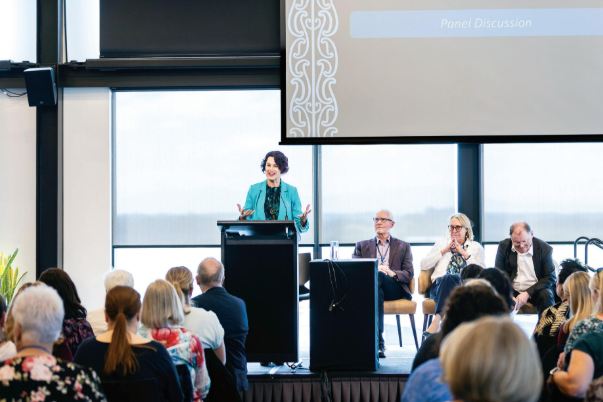
Brightstar is supporting school leaders for success with two specially designed events across three cities in June.
The events provide an opportunity for educators to tackle the biggest challenges such as workforce issues, governance and curriculum; build day-to-day leadership required as an effective principal; and connect with veteran educators over common issues and future vision.
The Future Principals’ Development Forum will be held on June 17 and 18 at Novotel Christchurch, Cathedral Square.
This forum kicked off in Auckland in March 2026, and Brightstar is excited to bring this hit event to Christchurch. Hear what delegates have to say about it:
“Loved the range of speakers and how honest and open everyone was.”
“…I found it extremely valuable. It was great to have new principals speak.”
“There were a lot of great people in the room to network with.”
Brightstar’s Legal & Governance Essentials for School Leaders will be held in Wellington on June 10 and 11, and Auckland on June 15 and 16.
This long-running popular event is a major fixture in school leaders’ professional development calendars. With a host of new school regulations and employment law to unpack, this event will help keep you ahead of changes and implications.
Brightstar will also cover other hot topics at this event, such as privacy and digital safety, governance, board relations, and more—it’s essential knowledge for principals.