From SOS to SMS: Efficiency and insight with school management systems
Does your school management system provide everything your school needs? It might be time to change or upgrade


School management systems (SMS) are common in schools, but most staff who use them could name elements of theirs that they would like to change.
It might be a feature that doesn’t work optimally for the context of the school, or workarounds they need to perform to get the needed result.
Read the latest print edition of School News online HERE
Working with these daily barriers and quirks can still seem easier than finding and implementing a new system, at least in the short term.
However, taking the time to look at what can be achieved with a change of SMS can save time and headaches in the long run.
Understanding SMS
The best SMS are ones that understand the realities of daily school life, and the challenges and opportunities that come along with it. Some New Zealand-based systems have been created by Aotearoa school staff, who have more insight than most into how schools run.
Each SMS comes with its own suite of features, but generally, they offer a way to gather a variety of data into a single platform to deepen understanding and utility.
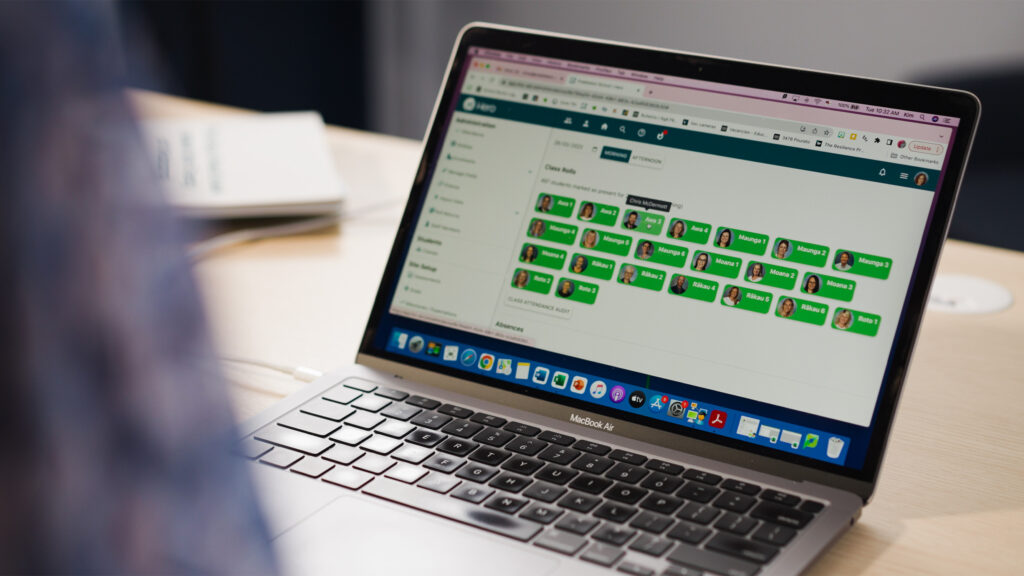
Most offer several portals, with different information and levels of access for leaders, educators, admin staff, parents and students.
Some potential features of SMS include trackers for students’ curriculum coverage, assessment, goal setting and self-assessment. There are also reporting tools for meeting Ministry of Education standards, gathering evidence and reporting to parents.
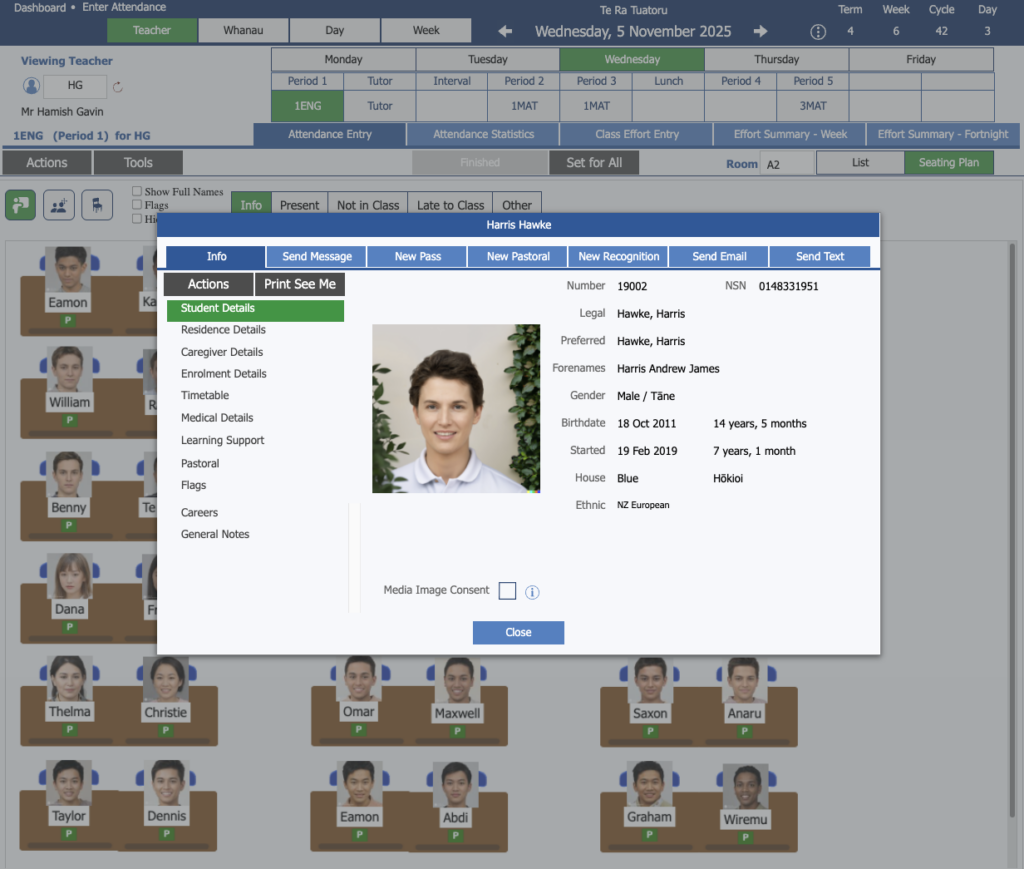
Additionally, SMS may offer admin tools for student management, enrolling, billing, attendance, student and caregiver records and class management.
Related School News article: Making secure choices: Choosing safe edtech software
The power of data
The strength of a good SMS lies in the data it provides and how this data is interpreted. Rather than waiting days, weeks or months for usable information to trickle through, by which time circumstances may have changed or interventions no longer possible, real-time analysis of anything from attainment to attendance allows for greater adaptability and resilience.
School management systems play a central role in how schools securely harness data to drive meaningful outcomes for learners, said Hero co-founder Paul Sibson.
“One of the most powerful aspects is the ability to capture and track longitudinal data – both at the individual student level and across the whole school. When staff can see how a learner is progressing over time, rather than just at a single point in time, it gives them the confidence to make informed decisions about next steps.
“This kind of visibility supports the early identification of students who may need additional support, which is critical. The sooner a teacher or leader can recognise a pattern of concern, the sooner they can act.
“Modern systems also enable collaborative analysis—teaching teams can moderate student work together, reflect on trends, and build evidence-rich narratives around student learning that go well beyond a number or grade on a page,” Mr Sibsson said.
“What’s equally important is that this capturing of data happens as a natural part of the teaching and learning cycle. It shouldn’t feel like an additional layer of administration for already-stretched staff.
“Ultimately, when schools have access to well-structured, reliable data, it strengthens conversations with whānau, informs resource allocation, and helps foster a genuine culture of continuous improvement—one that’s grounded in real evidence about real students.”
Tailor-made solutions
Kent Lendrum, Director of KAMAR, said it was important to look for a system that could fit a school’s specific needs.
“Tailoring is a core part of how a good SMS works. Look for systems that are closely aligned with the New Zealand education system and can respond quickly to national changes. This local responsiveness is a key advantage.
“The best choice is an SMS that enables the school to customise how they record assessments, track progress, and format reports, so they can reflect their own teaching and reporting practices while still meeting national requirements.
“A flexible system with highly configurable access is also important,” he said.
“Schools need to control what teachers, students, and whānau see, supporting both privacy and effective communication. Flexibility allows schools to adapt the system to different structures and tracking methods.
“Communication tools can also be tailored so schools decide what information is shared and how often, maintaining their own tone and connection with their students and whānau. Overall, an SMS should be flexible and adaptable, so it fits around each school’s needs rather than requiring schools to change how they operate.”
More opportunities for engagement
The ability to seamlessly communicate internally and externally through an SMS makes life much simpler for all school staff.
Mr Lendrum said that a good SMS should offer a variety of avenues for communication with caregivers and whānau.
“Look for a range of tools that allow schools to communicate in ways that suit their community, written or electronic, including email and SMS messages.
“Some SMS offer progress reporting features that enable schools to fully customise reports for caregivers, ensuring they reflect each school’s approach and priorities.
“More modern tools include automated reporting to reduce workload while improving consistency. Schools can automatically share key information with students, whānau, and staff, including automatic emails with weekly summaries, or when students reach absence thresholds,” Mr Lendrum said.
“Dedicated student and caregiver portals are also a key feature. With these, schools have full control over what is shared and how it is presented, allowing communication to align with their values and the needs of their community.
“Internally, SMS can also keep staff informed and responsive. Automated alerts can be set up so the appropriate staff are notified when students fall below a specified attendance percentage, are late to class, or have pastoral entries added, as well as many other alerts. This ensures staff can quickly identify and respond to concerns, supporting better outcomes for students.”
Related School News article: How does classroom technology impact information retention?
A modern school management system replaces fragmented channels with a single, secure platform, creating a transparent, real-time link between teachers, students, and whānau, Mr Sibson said.
“Through one app, schools can share learning goals, assessments, and examples of student work as they happen, giving whānau genuine visibility into their child’s learning journey. This supports informed conversations at home, builds trust, and creates shared accountability for learning outcomes.
“Modern systems also allow schools to communicate with precision, whether that’s a message to the whole community, a specific group, or individual families.
“All home-school communication lives in one place—learning updates, absence reporting, two-way messaging, interview booking, events, trip permissions, surveys, and payments. For schools, this reduces the administrative overhead of managing multiple tools, while also eliminating app fatigue for whānau. When the barrier to communication is lowered, participation naturally increases.”
Supporting staff confidence
Once an SMS is in place, it’s crucial that staff are confident in using it to its full potential.
Training and investment beyond the initial setup is crucial for success, Mr Lendrum said. “Long-term success with any SMS lies in investing in staff development. This means ensuring new staff are onboarded properly with the basics of how to use the system.
“Any database system can only truly show its value once there is buy-in from staff. Quality data in leads to quality data out, and if staff aren’t confident with the system, its benefits won’t be realised right away.
“For many staff, especially those new to a large SMS, it can feel overwhelming at first. But once they become comfortable with the software, everything falls into place. Confidence in the system not only reduces stress but also delivers tremendous value across the school,” Mr Lendrum said.
“To support this, choose an SMS with training videos and manuals, as well as direct support through phone, email, and chat. When staff encounter limitations or need new features, it’s often because they didn’t know the system could do more, or because they hadn’t communicated their needs.”
Mr Sibson said implementation looks different for every school and every platform, but the foundations of a successful rollout are consistent.
“From the outset, schools should be guided by their SMS provider with clear timelines, well-mapped next steps to align with strategic priorities, and support that meets them where they are.
“Timing shouldn’t be a barrier. A good SMS will support schools to make the transition at any point in the school year, securely managing data migration and guiding schools on when and how to move across with minimal disruption.
“Bringing staff into the process early builds confidence and ensures everyone feels set up for success—a good SMS will provide the tools, guides, and training to make that happen seamlessly,” Mr Sibson said.
“Templated setups mean schools can get up and running quickly, with implementation shaped around what schools genuinely need from day one. Training should be high-quality and readily available, from step-by-step video tutorials, live masterclasses, and help articles, to dedicated support specialists who respond quickly and meaningfully when you need them.
“The goal is for schools to start with the essentials and grow their use of the system naturally over time, at a pace that works for them.”
While it can take effort to find, implement and become familiar with a new SMS, finding a good one will pay dividends over time. With so much data and so many potential uses at staff’s fingertips, a carefully-chosen SMS can save time and stress school-wide.