Estonian Education Minister visits Aotearoa
Estonia has been on the international stage for its academic achievement. What can we learn from the small European country?

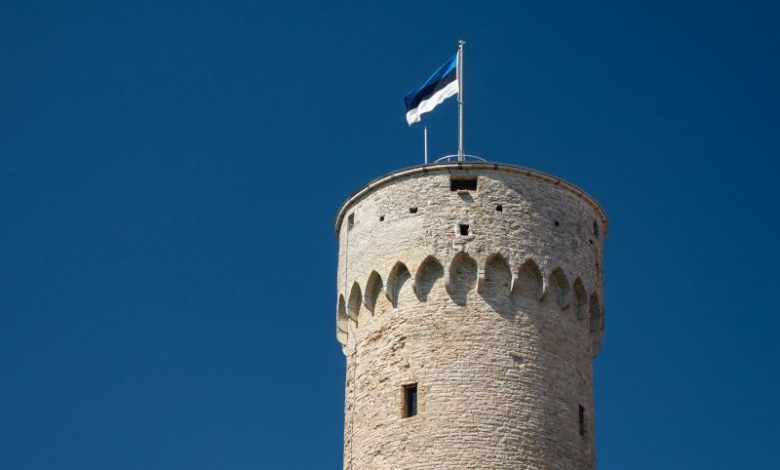
New Zealand’s education reforms are going “in the right direction”, says Estonian Education and Research Minister, Kristina Kallas, who was in the country last week to look at and learn from our education system.
Kallas says our reforms are in-line with debates happening in Europe, which has seen drops in student achievement, particularly in Maths. This follows a global post-pandemic trend, and has sparked debates on how to bring academic performance up through education system policy.
Read the latest print edition of School News online HERE.
“We do learn from each other… not only from good results, but from things that other countries have done which maybe have been mistakes… I’m here in New Zealand not to look at New Zealand mistakes but to look at the reforms that are currently being done in education and see whether those reforms are going toward the direction that many European countries are pondering… because there is a significant drop in performance in students especially in Mathematics.”
Kallas says Estonia was not exempt from this trend, though they remained highly ranked in PISA scores internationally. Kallas said that was due to their curriculum, which is “knowledge rich, focused on learning, memorising, repeating lines.”
These characteristics mirror the reforms being put through our education system, which may come as little surprise given Prime Minister Christopher Luxon has previously cited Estonia’s education system as inspiration for our reforms.
Despite Estonia’s performance, Kallas says there is still debate on how to raise achievement in Estonia. One aspect of our education system Kallas said she is interested in learning from is our relative strength in critical thinking.
“[Estonia is looking at] other levels of knowledge and skills, which is more about critical thinking, and I think New Zealand here has done that prior, so I’m here to look at the New Zealand reforms, but also things that have been good in the past and what New Zealand has been doing well in the education system.”
Kallas says despite our strength in critical thinking, she believes the current reforms are necessary as critical thinking must be built off a foundation of knowledge.
Estonia currently ranks highest in Europe in the PISA category of creative thinking.
The Estonian context
Speaking to TES Magazine earlier this year, Kallas says education is a core component of Estonian identity.
As a young country which gained independence from the Soviet Union in 1991, Estonia was not industrially developed and had few natural resources, which meant education was vital to building its economy, creating a national identity and increasing productivity, according to education analyst Geoff Masters.
Related School News article: EDUCATION – Where there are things that other countries have done well, we should steal it! – SchoolNews – New Zealand
“Being Estonian means being educated,” said Kallas, drawing comparisons between Estonia and high-performing Asian countries.
A small country, Estonia has a politically united view of education, which means the government “don’t do ideological interference,” said Kallas. The Estonian government does not mandate teaching approaches or hiring practices, which is supported by the PISA finding that teacher autonomy is “fundamental” to education systems.
Kallas said Estonia aims to keep pedagogical decisions as close to the child as possible, rather than from the top down.
Early childhood education is kept accessible and affordable, with 90 percent of children attending. Formal academic school does not begin until seven years old, and preschool is “a place where you focus on social skills and self-management,” says Kallas, though younger students are supported to recognise letters, numbers, some one- or two-syllable words and multiplications up to the fifth times table.
“In order to develop reading skills, the children have to have self-management skills first, so the kindergarten is very much focused on [being] capable of planning your learning,” said Kallas.
Related School News article: PISA 2022: An analysis – SchoolNews – New Zealand
Socioeconomic and academic stratification is not widely practised in Estonia, based on the principle that “education needs to be a social lift for those who would break the vicious circle of social class,” said Kallas.
Rather than individual schools being monitored to a set standard, Estonia’s Education and Research Ministry provides “thematic” reports, which are overviews of key aspects of the system. Schools are trusted to self-evaluate against these thematic reports.
Estonia also has few standardised exams. Up until age 15 to 16, students are only tested twice – once at age 10 to 11, and once at age 13 to 14. At the secondary stage, students sit state exams to graduate and to gain University entrance.
Parents are also allowed to choose where their child goes to school once they reach secondary years. However, there is a widespread belief in the connection between academic competition and mental health concerns in Estonia, which means it is a legal requirement to provide students with access to a psychologist if necessary. There has also been an effort to improve counselling access.
Related School News article: Ending streaming: the first annual report – SchoolNews – New Zealand
Estonia also has a legal requirement for each child to pass (achieve 50 percent or more) in the age 13 to 14 exam, so teachers are focused on those who need additional support.
These settings mean there is a very low percentage of underperforming students in Estonia, says Kallas, though there are some who want a stronger focus on academically excellent students. Ultimately, though, Kallas says Estonia is focused on equity.
“It’s a national choice of how you build your education system and what you are expecting out of it – and in Estonia, we expect equity, we expect that the education system is a social lift. We redistribute our education financing quite heavily from the richer regions to the poorer regions.”
Kallas is also staunchly against technology bans.
“We believe in Estonia that the mobile phone is a learning tool as much as a whiteboard, notebook or paper and pen.”
Related School News article: National’s controversial cell phone ban – SchoolNews – New Zealand
Their progressive attitude to technology has seen Estonia adopt a world leading stance to AI in education, providing all students and teachers access to AI tools.
Despite these strengths, Estonia is still struggling with common international issues in education, such as teacher recruitment and retention. After strike action in 2020, the Estonian government quickly agreed to an annual salary increase of almost 46 percent over four years for teachers, resolving the issue within eight days.
“Teachers are the absolute epicentre of the whole education system,” said Kallas.
“It’s the gold reserve that you have.”