
The past few years have seen rapid and dramatic shifts in New Zealand’s education system with the aim of addressing national issues like educational equity and achievement decline.
Since coming to power, the current government has implemented several education policies such as compulsory reading, writing and maths teaching time; a school cell phone ban; a new “knowledge-rich” curriculum; the end of modern learning environments; and structured ways of teaching for core subjects like reading and maths.
Read the latest print edition of School News online HERE.
These policies herald a shift in the values and ideologies that underpin our education system toward a camp of educators known as “traditionalists”, who advocate for a model of education characterised by a focus on academic achievement, standardisation, order, and an emphasis on the teacher’s authority.
Overseas “traditionalist” education leaders and thinkers are becoming influential amongst policymakers, as they promise to quickly and effectively address many of the problems, real and perceived, in our education system.
Of these, one of the biggest is the question of student behaviour, with incidences of disruptive and even violent conduct at schools regularly making headlines. Education Minister Erica Stanford has promised that recent policies will raise national achievement and close equity gaps. Now, some educators are turning to traditionalist ideas of behaviour management, which promise to restore order to classrooms and create ideal learning environments.
Disrupted classrooms
A 2024 research report from the Education Review Office (ERO) titled Time to Focus: Behaviour in our Classrooms outlined the extent of challenging behaviours teachers face in New Zealand. It found that New Zealand students were some of the worst behaved in the OECD, and that behaviour has worsened in the past two years.
Classroom behaviour matters because of its impact on learning environments. Settled environments mean teachers spend more time teaching rather than managing behaviour, and students progress more quickly and are more likely to enjoy learning. Unsettled classrooms also impact teachers’ health, and the overall school culture.
Challenging behaviours reported by teachers included students calling out and distracting others, and physically harming others or damaging and taking property. Almost half of teachers spent 40 to 50 minutes a day addressing challenging behaviour, and most teachers believed student behaviour impacted academic progress and students’ enjoyment of school, which has flow on effects for attendance. The report also found many teachers were not prepared to manage behaviour in the classroom and struggled to access support, impacting their morale and the likelihood of leaving the profession.
The report notes there are many influences on students’ behaviour that are outside of teacher or school control, including an individual’s temperament, development, emotional regulation and communication skills, and disability; family factors like home environment, stress, parenting and mental health; social and peer dynamics; trauma; cultural factors; and safety and accessibility of support services. Though the causes are complex, the ERO says knowing and understanding student context is an important aspect of managing classroom behaviour.
Stand-downs, suspensions, exclusions and expulsions are considered a means of last resort in response to serious or sustained negative behaviour. However, the latest data shows that in 2024, expulsions in New Zealand rose to their highest numbers since 2020, and more secondary students were stood down in 2024 than in the past five years.
The most common reason for stand downs continues to be peer physical assault. Stand downs are associated with negative life outcomes, such as leaving school early, poor health, unemployment and offending. The likelihood of these outcomes increases the younger a student is first stood down, suspended or excluded.

Current behaviour management frameworks
The ERO’s accompanying good practice report recommends a mix of proactive (encouraging good behaviour) and reactive (discouraging bad behaviour) approaches to classroom management, including knowing and understanding individual students and the influences on their behaviour; using a consistent approach across the school; using classroom strategies to support behaviour expectations; and responding effectively to challenging behaviour.
Behaviour expectations are set schoolwide, and stem from the culture and values set by leadership in collaboration with the community. Teachers should learn classroom management techniques and skills, including relationship building, effective responses and de-escalation. Schools should also have a clearly defined procedure for escalating behavioural issues beyond the classroom if necessary.
Over two fifths of schools in Aotearoa New Zealand use the Positive Behaviour for Learning Schoolwide (PB4L) framework. The PB4L framework takes a proactive approach to behavioural management. It operates on the principles that positive behaviour can be learned, that environments influence behaviour and are changeable, and that positive behaviour is important for engagement, wellbeing and achievement.
Its three-tiered approach encompasses universal, targeted, and individualised behavioural supports for schools, and it emphasises a restorative practice to address incidences of negative behaviour. The PB4L framework operates on the understanding that student wellbeing and behaviour are linked, therefore addressing wellbeing is an important part of behaviour management.
Related School News article: Resetting New Zealand’s education system for success
A 2016 review of the PB4L framework in New Zealand found that it was successful in achieving significant reduction in negative behaviour and associated increase in positive behaviour. Children were shown to respond well; the framework was associated with better opinions of the school, increased motivation and academic gains.
Behavioural support services for schools include resource teachers of learning and behaviour (RTLBs), who support ākonga in Years 1 to 10. There are also online resources available on the Inclusive Education website, which guide educators on how to provide inclusive support for a range of needs. These resources are available on the Ministry of Education’s website under the section “Behaviour Management”, underlining New Zealand’s current, holistic, inclusive and wellbeing informed approach to behaviour management frameworks.
Current frameworks in New Zealand are well-aligned with best practice models supported by local and international evidence, yet it seems instances of dysregulated behaviours are increasing in our classrooms. Taking cues from recent policy direction, some educators are turning to traditionalist, “zero-tolerance” models of classroom behaviour management.
Traditionalist values: An education import
Many of the recently instated education policies in New Zealand mirror UK policies of the last decade. Both Stanford and Prime Minister Christopher Luxon have toured the UK and its schools and been impressed with the education system. Former UK Minister for Schools Sir Nick Gibb is currently consulting with Stanford, and prominent education leaders from the UK and US have toured New Zealand and Australia, bringing their ideas down under.
Gibb served under the Conservative government in the UK, and oversaw reforms such as introducing phonics, a “knowledge-rich” curriculum and “more rigorous” exams— policies which echo National’s recent mandates. His reforms have been credited for lifting the UK’s achievement in English and Maths compared to other OECD countries.
However, in 2023, a government report into the UK’s 2022 PISA results found that after adjusting for sample bias, England’s academic achievement has not changed significantly from 2009. Additionally, students are reporting the second lowest levels of life satisfaction in the OECD, and teacher shortages are impacting students. Socioeconomic achievement gaps have not closed, and reforms have been criticised for worsening youth mental health.
Related School News article: Increased teacher stress = decreased co-regulation
Under Gibb’s guidance from the 2010s, schools in the UK enforced a “no excuses” or “zero-tolerance” behaviour policy, and teachers were given expanded power to “sanction” students for perceived misbehaviour. On its face, this approach appears consistent with many of ERO’s good practice recommendations, like having a consistent whole-school response. However, the approach has been criticised for being overtly punitive, authoritarian, inflexible and lacking nuance or consideration of the underlying factors for perceived misbehaviour.
National guidance directed schools to create a “behaviour curriculum,” where students are taught expected standards of behaviours. A zero-tolerance approach usually involved universal and automatic disciplinary measures such as detentions for infractions like lateness, wearing the wrong uniform, or speaking in corridors. Serious misconduct could result in automatic exclusions, without exception.
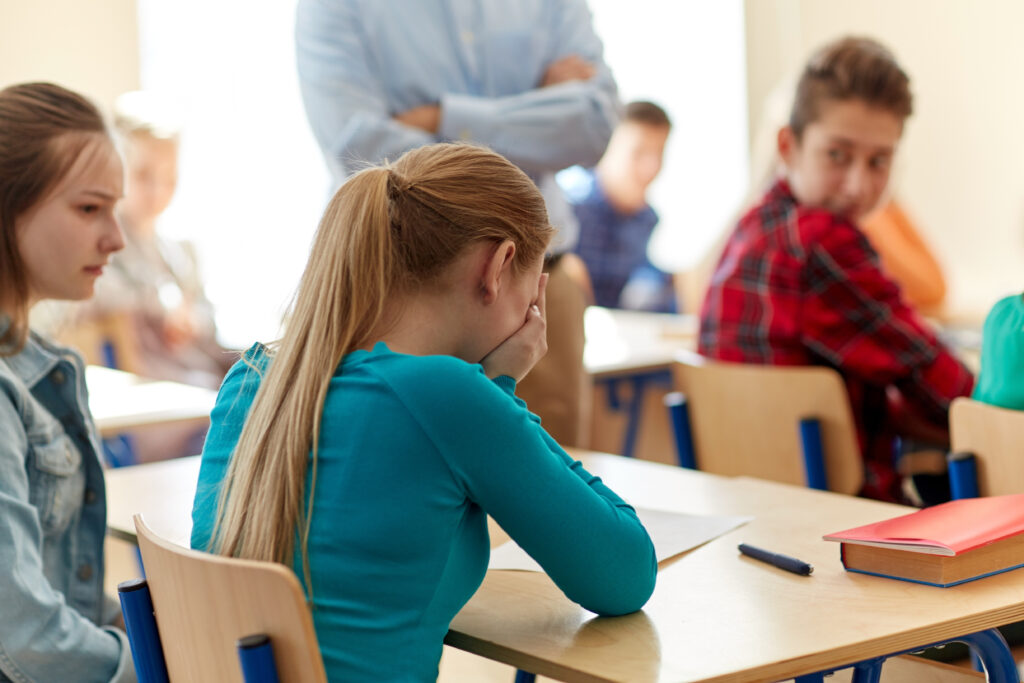
This pattern of setting and reinforcing expectations was promised to transform behaviour in schools. In practice, the approach led to children with additional needs, or those struggling with familial, financial or social issues being severely punished.
At the 2019 National Education Union conference in the UK, teachers called the approach “inhumane”, and one said it was “child abuse”. One common sanction was the use of “consequences booths” where children were isolated. In one case, a girl with autism spectrum disorder was put in isolation for over a month, where she attempted to take her own life.
Related School News article: Stand-downs reach 20-year peak
Under the “zero-tolerance” approach, England recorded record numbers of suspensions and around 40 student expulsions per day between 2015 to 2017. The poorest students, and those with additional needs accounted for most of the expulsions. Figures showed that black Caribbean students were three times more likely to be excluded compared to the whole school population.
In 2019, a report from the Education Endowment Foundation (EEF) found there was no evidence to support a “zero-tolerance” policy and recommended a focus on developing strong teacher-student relationships and understanding of a child’s context—an approach in line with our current settings. That same year, there was a call from an Oxford academic to adopt trauma informed approaches to address disruptive behaviour, drawing on local research and case studies which found this approach had positive impacts on classroom behaviour and wellbeing.
How our schools shape behaviour
Though a zero-tolerance approach has been widely condemned in the UK, it’s not surprising that New Zealand educators may be seduced by its promises, given the data that shows behavioural challenges are rising and so are associated stand down and exclusion statistics. The zero-tolerance approach promises to eliminate disruptions in classrooms through enforcing total compliance. But if the goal is to reduce stand downs and exclusions, and avoid associated negative life outcomes, research suggests that part of the solution lies with changing adult attitudes, expectations and perception of children’s conduct.
Disruptive behaviour is often seen as the fault of the child, whereas evidence shows adverse incidents often point to unmet educational needs, especially for children with additional needs, which may be undiagnosed.
Related School News article: Neurodivergent learners in Aotearoa New Zealand
Additionally, adverse behavioural incidents in the classroom occur in the classroom context, which is shaped by teachers, implying a shared responsibility. As Australian researcher David Armstrong writes in his 2018 paper, “Professionals cannot abstract their role and their relationships with students out of reciprocal interaction: behaviour only occurs within the context of relationships.”
Armstrong goes on to posit that burnout in the teaching workforce could be a causal factor in disruptive student behaviour, causing a negative cascade whereby stressed teachers are less able to create positive classroom environments, and increased instances of poor behaviour raise teacher stress.

Importantly, international research has also shown that a student’s anticipation of success and perceived self-competence is associated with on-task behaviour and higher motivation. Conversely, when students perceive schoolwork as less relevant, off-task behaviour and opposition to teachers increases. This suggests that it’s not only the school environment that matters, but a school’s pedagogy and curriculum itself. If students are not set up to succeed in a system that is not designed for them, research suggests they are more likely to be disruptive or withdraw altogether.
Notably, the increase in New Zealand’s stand downs and exclusion statistics does not necessarily reflect changes in student behaviour but could reflect changes in how schools perceive and respond to behaviour. The PB4L model is based on a framework developed in the US, which has also seen a rise in stand downs and exclusions statistics. Research there has shown educator attitudes may have hindered the model’s implementation and therefore success, leading to a fallback on stand downs and exclusions as a response to perceived misbehaviour.
It does, however, seem likely that disruptive student behaviour is on the rise in Aotearoa New Zealand. Besides the social and economic challenges of the past few years, teacher shortages have been straining the workforce, inevitably affecting the quality of teaching and learning, which has been shown to impact student behaviour.
Support services for those with additional needs have also been strained, both in education and related fields like healthcare and social services. A lack of support is known to contribute to dysregulated behaviour.
These findings raise further questions about the causes of, and responses to, the worrying rise in reported behavioural issues in schools. Contributing factors range from the macro-level, like the social and economic climate of the country to the education sector’s policy settings, all the way down to the individual level of school cultures, leadership, teacher attitudes and student support.
New Zealand’s current frameworks like PB4L provide best-evidence guidance at the school level, but in some cases, it simply may not be enough. What’s clear is that the issue of student behaviour cannot be easily or quickly solved, and educators may rightly be wary of any program that promises otherwise