
Announcements, emergencies and everything in between: Smart communications for schools
Modern IP communication allows greater flexibility, including easier installation and more options around uses, placement and customisation


Audio and communication systems are often an understated workhorse in schools; when they function well, most staff, students and whānau don’t think much about them day-to-day.
However, when something goes wrong—whether that’s technical problems from aging infrastructure, volume issues with a PA system at a school sports day, or even in an emergency—everyone notices.
In a nutshell
Evaluating your existing audio and communication systems and identifying any shortcomings can help to head off any issues before they become troublesome, and with next-generation smart audio systems, there are bound to be options that suit every setting and scenario.
Read the latest print edition of School News online HERE.
Modern systems rely on IP paging, rather than analogue wiring; simply put, they transmit via the same internet connection used for a school’s wifi. IP communication allows much greater flexibility, including easier installation and more options around uses, placement and customisation.
Benefits of IP systems
Today’s communication systems offer access to a host of features that older ones cannot provide, such as integrating speakers, clocks, bells and emergency systems to create an ecosystem that removes redundancy and is simpler to use.
Another major benefit is that many systems offer zoning and scheduling that work together. If older students work on a different timetable to younger ones, for example, then bells, reminders and other messages can play at the correct times for each zone. It also means that announcements don’t need to interrupt classrooms where they are not relevant.
Emergency management
In an emergency, the seamless integration and smart features of an integrated classroom system come into their own. In weather events, fires and lockdowns, instant, targeted messaging can make all the difference. Systems can also be customised with digital displays to deliver messages to students and staff who cannot hear them.
Pre-recorded messages can also be utilised in emergency scenarios, so key points including safety information and muster areas can be given automatically, freeing up main personnel for other time critical tasks.
With so many possibilities for schools, from integrating new technology into old systems to starting over with a bespoke layout, School News talked to the experts about what to consider when implementing a smart communications system.
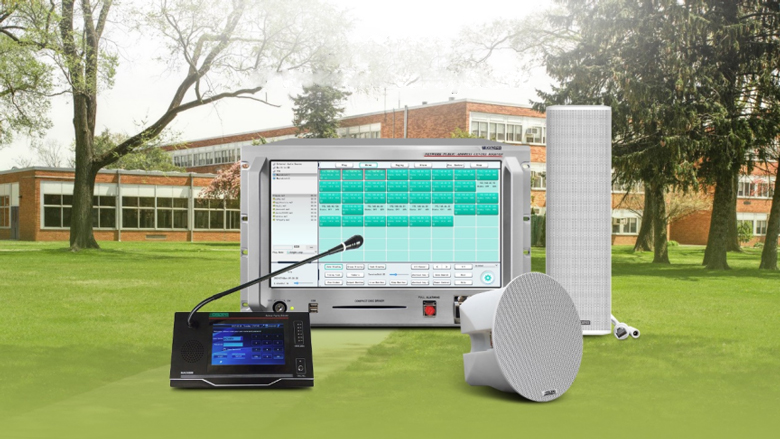
How can schools get started with designing new communication networks?
Namo Naicker, WiPath Communications Ltd: Designing a communication network for a school begins with understanding how information needs to move across the campus. Schools typically rely on a combination of systems such as digital signage, paging, classroom displays, and event audio systems.
Rather than implementing these technologies separately, many schools are now adopting integrated communication networks that allow messages to be delivered consistently across multiple platforms.
A practical starting point is reviewing existing infrastructure, including network capability, power availability, and current communication systems. From there, schools can identify opportunities to improve how information is shared internally and externally.
Schools are busy places, and clear, concise messaging, that can be delivered flexibly, is essential. In what ways are modern IP paging and PA systems assisting schools with this?
Euan Mackenzie, NAS Solutions: Clear, reliable communication is important for any well-functioning school, but it’s usually only appreciated when something goes wrong. Recent developments in AV technology are helping schools move beyond clunky ‘sticky-plastered’ systems toward integrated, communication networks that are simple to use, flexible and most importantly dependable.
Couple this type of backend with carefully chosen modern speaker designs and audio systems can deliver consistent, intelligible messaging across classrooms, outdoor spaces, and shared facilities, ensuring that everyday announcements, timetable changes, and pastoral communications are heard clearly by the entire school (and not the neighbours).
One of the most significant shifts has been the move toward networked audio which allows these systems to converge with existing data infrastructure.
Related School News article: Organised tech charging and storage for uninterrupted learning
Schools can now manage announcements centrally while still allowing for zoned or localised messaging. This reduces disruption, improves clarity, and supports more tailored communication, whether that’s a reminder to a single block or a full-school assembly call.
Just as importantly, these systems are becoming easier to use, meaning staff can act quickly and confidently without needing technical expertise.
Safety is always a key concern in schools. What role do sound systems play in ensuring safety for the school community during large events?
Jonathan Neil, Edwards: A school’s audio system is often invisible until something goes wrong, and that’s exactly how it should be. When it’s working well, nobody notices it. When it fails, everyone does.
For schools hosting large events, whether a prizegiving in the gymnasium or a gala day on the sports fields, the question of sound is really a question of control. The moment you have several hundred people in a space, your ability to communicate clearly with all of them simultaneously becomes a safety issue, not just a comfort one. Crowded environments are noisy and disorienting. A well-designed system cuts through that instantly.
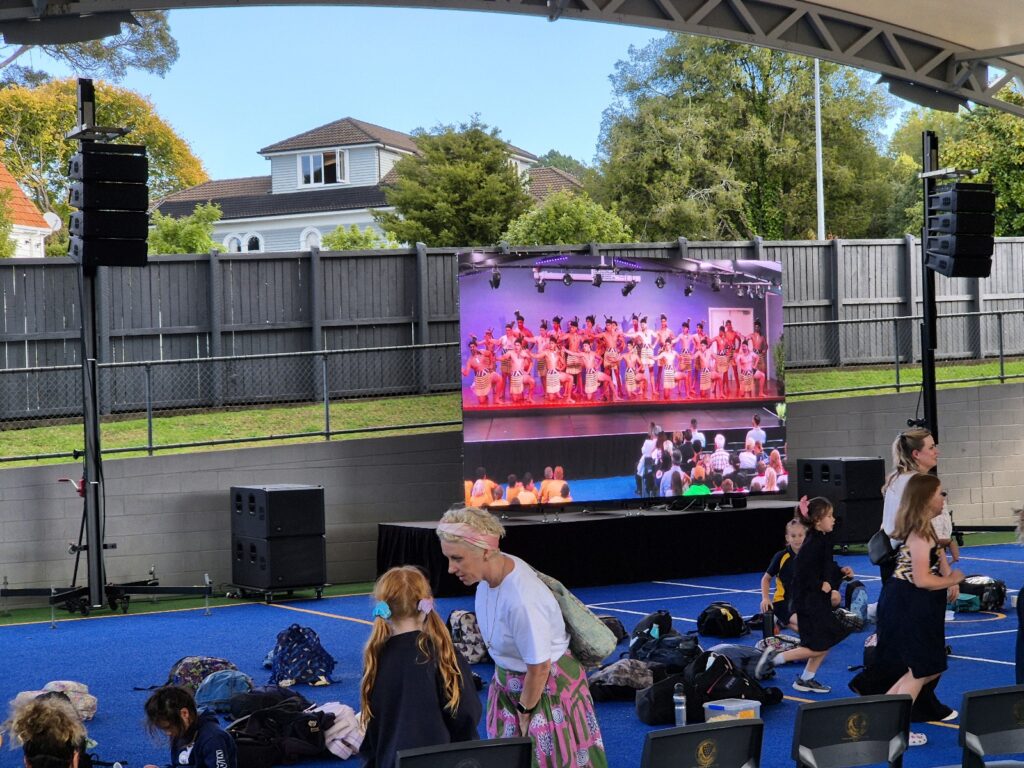
Namo Naicker: Large school events such as assemblies, sports days, cultural performances, and prizegivings often bring together large groups of students, staff, and visitors. In these situations, clear communication plays an important role in maintaining safety and coordination.
A well-designed sound system ensures announcements and instructions can be heard clearly across large spaces such as halls, sports fields, and outdoor gathering areas. This allows staff to guide crowd movement, share important updates, and respond quickly if circumstances change.
Modern network-based audio systems can also integrate with paging and emergency notification systems, allowing urgent messages to be broadcast across multiple areas of the campus simultaneously. Alongside safety benefits, well-designed sound systems also improve the overall event experience by ensuring speeches, performances, and presentations are clearly heard.
Modern sound systems support schools during emergencies by enabling clear, campus-wide communication—explain the benefits they provide in these situations.
Jonathan Neil: The role of audio in genuine emergencies is where the investment becomes most obvious.
In a lockdown or an evacuation, you may have seconds to communicate clearly with staff and students across an entire campus. That is not the moment to discover your system only covers half the buildings, or that nobody knows how to use it.
Schools that have invested in proper IP audio infrastructure with zoned coverage, simple interfaces, and tested procedures are the ones where staff feel genuinely confident, not just compliant.
The technology has also become far more accessible. Modern IP audio systems can be operated from a smartphone. A teacher can initiate a campus-wide announcement from a classroom. That kind of reach used to require a dedicated operator—it no longer does.
Euan Mackenzie: In critical situations such as severe weather events or lockdowns, the difference a well-designed sound system makes cannot be overstated. Clear, immediate instructions reduce confusion and help maintain calm, which is essential for both student safety and staff response. In these moments, communication must be instant, unambiguous, and audible in every corner of the school.
Ultimately, investing in thoughtful, future-proofed audio infrastructure is not just about convenience, it’s about creating an environment where communication supports both learning and safety every day.
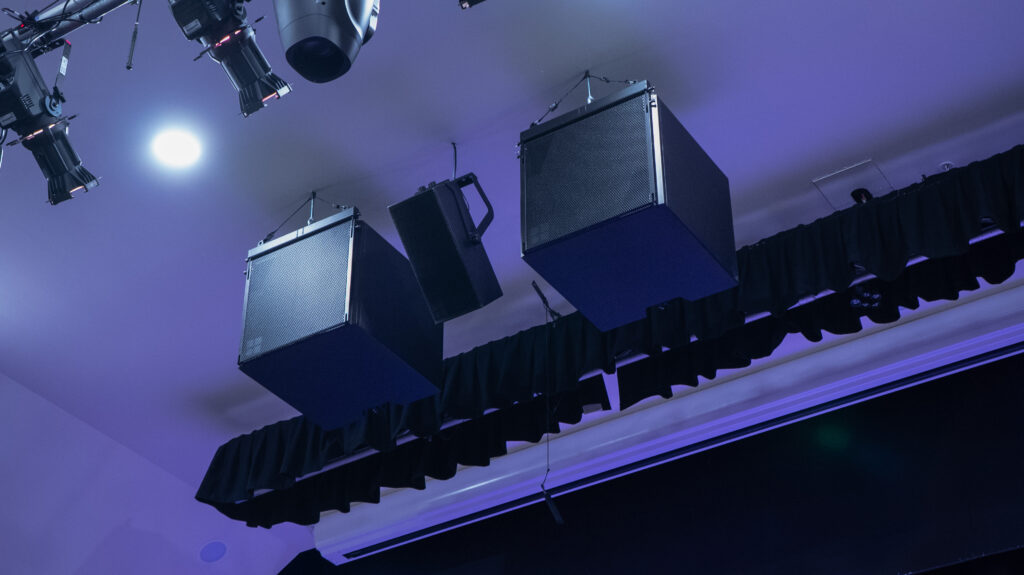
What are some factors that schools should consider when hiring, upgrading or replacing audio or communication networks?
Euan Mackenzie: Schools sometimes underestimate the importance of sound intelligibility over sheer volume. A loud system is not necessarily an effective one.
Factors such as speaker placement, background noise, building acoustics, and even future campus expansion all play a role in whether a message is understood.
Resilience is another often overlooked consideration. Systems need backup power and redundancy to remain operational during outages or emergencies.
Read more Administration articles on School News HERE
Namo Naicker: Schools often focus on immediate needs, such as installing or upgrading a hall sound system. However, long-term planning is equally important.
Scalability is a key factor, as communication systems should be able to expand as schools grow or new technologies are introduced. Integration is also important, allowing systems such as digital displays, paging, and event audio to work together as part of a connected platform.
Finally, reliability and ease of use are critical. Systems that staff can operate confidently—and that perform consistently during important events—will deliver greater long-term value for the school community.
Jonathan Neil: When schools are hiring equipment for outdoor events such as whānau days or sports days, the most common mistake is underestimating the space.
Outdoors, sound behaves completely differently to indoors. There are no walls to reflect it, wind works against you, and the distances involved are often larger than people expect. The right equipment for a school hall is rarely the right equipment for a field.
Schools should be specific with their AV provider about the outdoor area dimensions, the expected attendance, and whether they need coverage across multiple zones simultaneously; a single PA speaker pointed at one end of a field is not a solution.