The power of immersive school productions
When ākonga engage in the arts through theatre, they are engaging in layers of multisensory communication and a rich cultural heritage

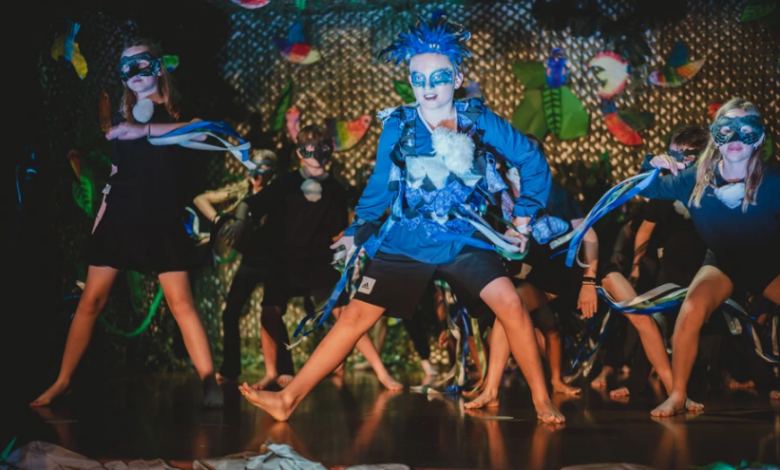
School productions are about more than just putting on a show in the hall—they’re a means to bring together a community, boost wellbeing through engaging in creative outlets and expression, and to enrich learning through new experiences.
When ākonga engage in the arts through theatre, they are engaging in layers of multisensory communication and a rich cultural heritage passed down from our very earliest ancestors.
Read the latest print edition of School News online HERE
Though most tamariki are exposed to storytelling from the time they’re born, for most of our young ākonga, participating in a school production is their first time working at scale with others to create an immersive, personal and localised performance. The final impact is a show that will bring all their worlds together—peers, family and kaiako alike—creating a powerful experience and shared memories.
The power of performance and productions
Sally Sutton, writer at Hī Hā, understands the impact of school productions well.
“School productions are powerful. They don’t just help ākonga to learn and grow, they engage entire communities. Parents come to see their kids on stage. Grandparents come. Uncles and aunties come. If ever there was an opportunity to showcase not just your learning, but your ideas, your values, the unique identity of your kura in Aotearoa, a home-grown school production is it.”
Musicals are a popular choice for school productions because of their multidisciplinary offering, bringing together music, dance and performance. Lleuarne Panoho, choreographer at Hī Hā said encouraging movement for students is an integral benefit of school productions.
“Theatre is physical,” said Ms Panoho. “Lots of action, and well-choreographed dancing, is a must. Dancing is a great way to help tamariki celebrate what it means to be Kiwi, to learn, to connect, to move, to shine…and especially to have fun!”
Importantly, engagement is key to ensuring that students gain the full benefits of participating in a school production.
Ms Sutton said: “There’s increasing awareness that inclusive, culturally relevant productions deepen student engagement and learning.
“We all know that New Zealand tamariki deserve to see themselves reflected on stage, but it’s not enough just to tell them. We need to show them.”
The right approach for your school
So how should schools choose the right production to engage their students and their communities?
For schools in need of guidance, there are plenty of local providers who can help. Professional partnerships with theatre companies can bring performance and production expertise directly to staff and students.
It may help to consider the context of your school or kura and what your ākonga need. Will seeing a professional rendition of a scene excite and engage students? Will a musical offer opportunities for students who play instruments? How about the themes of the production—what messages would you like students to take away?
“So much depends on the script,” said Ms Sutton.
“Is there a curriculum-friendly theme? Is it written by a professional author? Is it funny, relevant, culturally appropriate? Is it well-paced, full of movement and fun, or does it drag? Does it roll off the tongue, or stay glued to the page? And most importantly: are kids going to love it?”
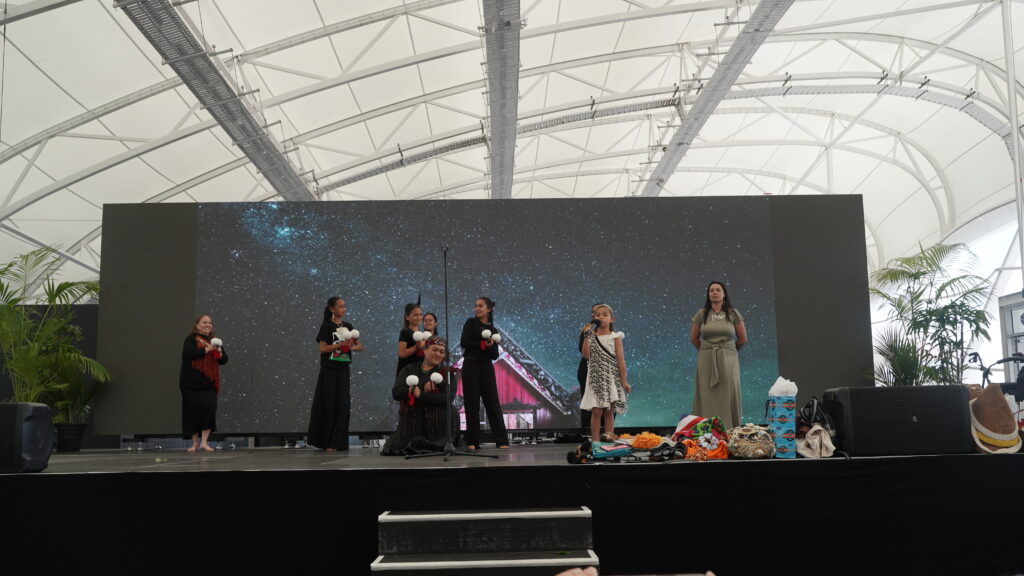
Lights, camera, action
Whether your performance is staged in the school hall, an outdoor amphitheatre, the oval or an offsite location, a range of equipment can take your performance to the next level.
Portable and permanent stage configurations can elevate the production to new heights by enabling the cast to interact with the audience in new ways and take full advantage of auditorium space.
Light, sound and images can also take your production to the next level, wowing the community while bringing them together and creating new learning opportunities for older students. Lighting and AV systems can be multipurpose, bringing added value to central spaces like auditoriums beyond school productions.
Read more education news on School News HERE
Namo Naicker from WiPath Communications Ltd said that modern AV systems can transform school productions from simple performances into polished, immersive experiences.
“High‑quality audio ensures every line and lyric is heard clearly, while intelligent lighting and visual effects add depth, mood, and professionalism.
“Investing in improved AV also gives students opportunities to work with real‑world technology used in theatre, broadcasting, and live events, and helps to build confidence both on stage and behind the scenes,” Mr Naicker said.
“Systems that adapt to different venues and event sizes offer the greatest value. Modular sound systems, wireless microphones, mobile control stations, and scalable lighting rigs allow staff and students to create high‑quality productions without complexity.
“Flexible equipment ensures AV can be used throughout the year for assemblies, awards evenings, cultural events, and community functions—not just theatre shows.”
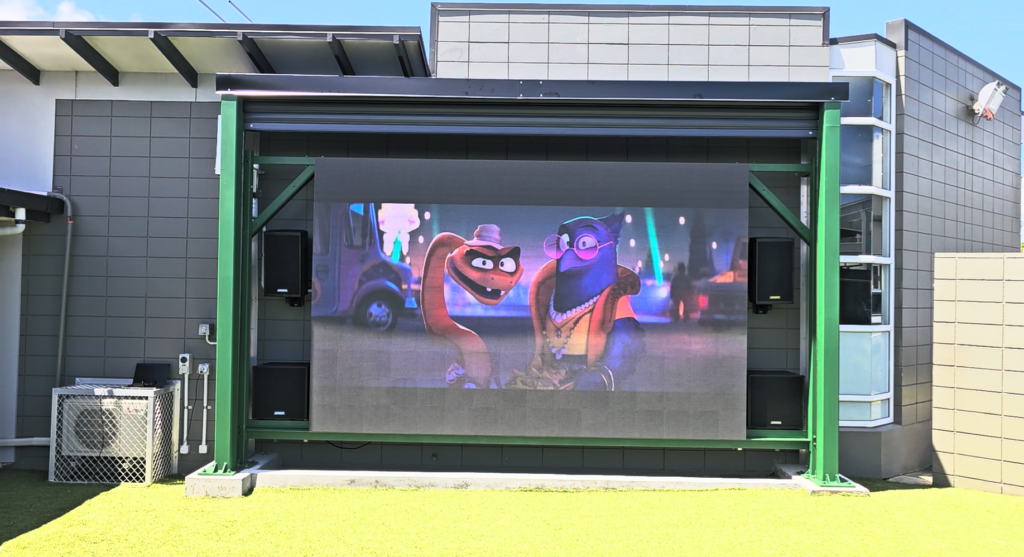
Jonathan Neil, General Manager at Edwards said quality audio visual systems transform school productions. “Pro-sound systems and wireless microphones ensure every student hears announcements clearly, while LED screens are visible even in well-lit halls.
“Modern systems include smart automation: screens automatically switch to the correct input when a laptop connects, eliminating those “technical difficulties” moments. Preset scenes allow staff to recall appropriate settings with a single button press, reducing operator stress considerably.
“When students work with industry-standard equipment such as professional mixing desks, DMX lighting controllers, and LED displays, they’re gaining exposure to the same tools used in professional theatres, broadcast studios, and corporate events worldwide. This hands-on experience can spark careers in technical theatre, live events, audio engineering, or video production,” Mr Neil said.
“Production work teaches invaluable skills, including problem solving under pressure, seamless team coordination, and genuine technical proficiency. These aren’t abstract lessons; the students learn to operate complex systems, troubleshoot equipment, and deliver under live performance conditions.”
Mr Neil said modern technology is improving systems. “AI-assisted lighting controllers have revolutionised what’s possible. These systems can generate quite sophisticated light shows automatically, making professional results achievable even for beginners whilst still offering depth for students who want to develop advanced skills.
“While more professional or prosumer equipment requires higher initial investment, it delivers substantial savings: LED PAR and theatre lights last 10 plus years, require minimal maintenance, and dramatically reduce power consumption compared to older technologies. Quality equipment also retains value and can be expanded rather than replaced entirely.
“Schools considering upgrades should start with solid foundations—quality speakers, essential lighting with DMX control, basic wireless microphones, and one display option—then expand capabilities as budget allows. This scalable approach ensures systems grow with your needs whilst maintaining professional standards and providing equipment that everyone should be happy using.”
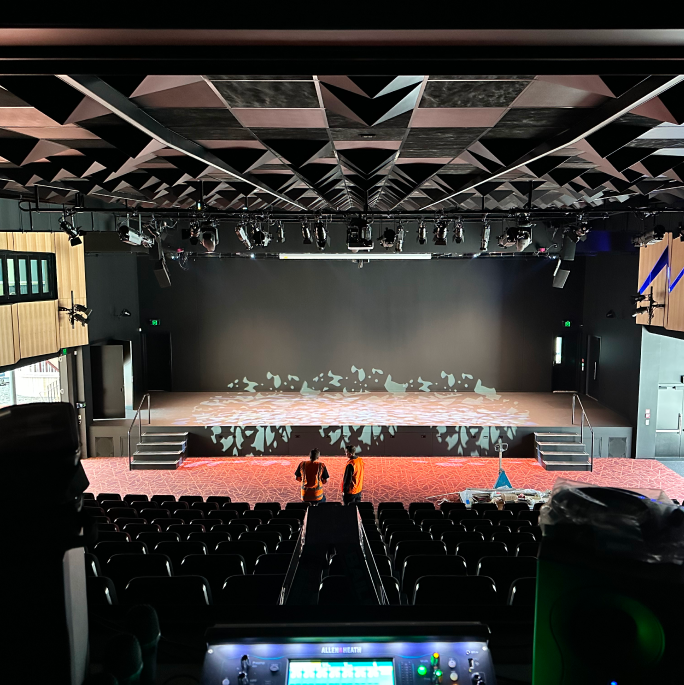
Euan Mackenzie from NAS Solutions said that the right AV system for the school context is vital.
“Getting the basics right is the foundation of any successful school production. A well-designed and properly installed AV system ensures every word is heard clearly and consistently across the entire audience, allowing performers to be understood and confidently take the stage.
“Solid audio coverage, reliable microphones, and balanced sound create a professional baseline that lifts both the performance and the audience experience. Once these fundamentals are in place, schools can layer in lighting, video, and soundscapes to enhance storytelling without compromising clarity.
“Industry-leading audio software options offer an intuitive approach which allows young users to experiment, design, and shape audio experiences creatively, without being hindered by technical complexity—building skills directly aligned with modern industry practice.”
Schools may also consider utilising LED displays. These displays are often practical for multipurpose spaces as they can double as a presentation screen, or be programmed to display a myriad of images to enhance performances.
WiPath’s Mr Naicker said: “LED displays introduce a powerful creative dimension.
“Their brightness, colour accuracy, and customisable formats enable animated scenes, digital sets, and dynamic backdrops that instantly shift environments. Beyond productions, LED walls can showcase school branding or sponsorship messages, helping offset costs while strengthening community ties.”
Related School News article: Inform, inspire and unite with digital signage
Mr Mackenzie from Edwards highlighted the multifunctional nature of LED displays. “LED technology plays a dual role in schools: it supports day-to-day presentations with bright, high-visibility displays, and it can instantly transform a stage backdrop into a dynamic digital set for performances.
“Instead of building physical scenery, LED walls allow schools to switch between environments effortlessly—from forests and cityscapes to abstract atmospheres. With the rise of AI-powered content creation tools, generating tailored visuals, animations, and backgrounds is easier and faster than ever, expanding creative possibilities for students and staff alike.”
A lasting impact
Staging a successful school production involves a significant investment of time, energy and resources from everyone involved.
While the rehearsals might be tiring, and participation might seem scary to some students, the feeling once the production has been met with riotous applause from a cheering audience will long outlast any frustrations. All in your community will look back on the production as a treasured memory, and the learning outcomes¬—both intentional and unintentional—will endure.