Learning for the future: STEAM in schools
Fostering our learners’ skills, confidence and curiosity through STEAM is crucial for building a future-proof workforce

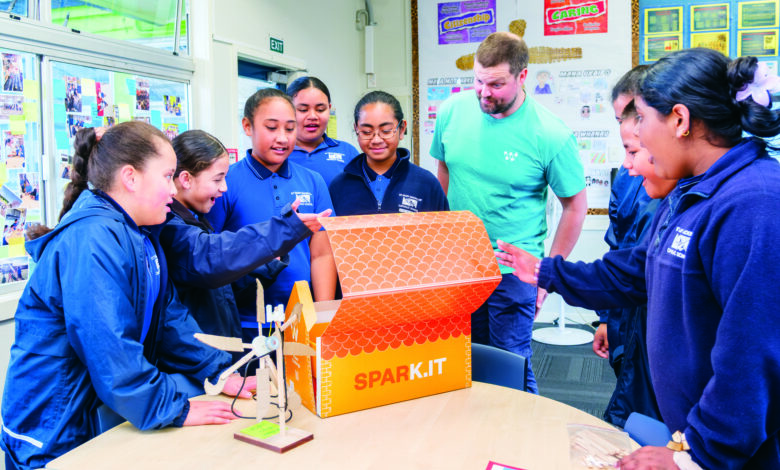
STEAM learning (science, technology, engineering, arts and mathematics) has been a successful model in Aotearoa New Zealand for decades.
Through project-based learning, STEAM encourages active, student-led inquiry, developing students’ critical thinking, and strengthening engagement as students take charge of their learning.
Read the latest print edition of School News online HERE
These outcomes align with the 2007 New Zealand Curriculum, and now with the updated draft curriculum, which states the main purpose of school is “to support students to gain the knowledge and skills they need to be lifelong learners, experience success, and to fully participate in jobs and careers, society, and their communities.”
In the future, an estimated 80 percent of jobs in Aotearoa will require science, technology, engineering and/or mathematics skills. Fostering our learners’ skills, confidence and curiosity through STEAM is crucial for building a future-proof workforce, and a thriving society.
STEAM empowers students to take charge of their learning, and encourages children’s natural curiosity through virtue of its project-delivery model. By investigating a real-world problem, finding their own angle of investigation and designing a solution, STEAM projects link the sometimes-abstract fields of science, technology, engineering and maths to the tangible, physical and material world.
Research shows students are more engaged in school when they feel learning is relevant to themselves and their community, and STEAM projects present the perfect opportunity to personalise learning, as projects can be taken from, or tailored to, a variety of local contexts.
With the right project and encouragement, STEAM learning can enhance learners’ sense of self-efficacy and confidence, and foster positive social experiences that are carried forward into future learning. Additionally, as the world becomes increasingly complex, traditional siloed methods of teaching become inadequate—STEAM learning integrates many fields and skills, developing problem solving skills that will be needed in today’s job market.
Designing a STEAM project
Despite the huge potential for positive impact, teaching STEAM can be challenging.
Firstly, designing a project often relies on teachers’ own understandings of each field and its applicability to specific contexts. Additionally, identifying contexts that may interest learners can be challenging, especially when catering to diverse interests.
Designing a STEAM course may necessarily require more than one teacher’s input or oversight, and kaiako also have to consider the skills and outcomes the class is working toward, as well as what skills and knowledge the class already possesses.
Like any other course or programme, a good STEAM project should have elements like a clear statement of purpose, specified learning objectives, map of course content and sequence, an overview of the pedagogical process used, assessment framework, and a roadmap for ongoing learning.
When designing a STEAM project, it’s important to consider equity. Gender and ethnic minorities are less visible in STEM disciplines, so teachers should consider how STEAM might be tailored to engage different groups.
One way to do this is by codesigning projects with students. This reinforces learner agency and takes advantage of students’ natural curiosity—what are your ākonga interested in, and how can they create, make, design or otherwise investigate the subject?
In Aotearoa New Zealand, STEAM practices range from lunchtime, student-led skills workshops to more structured, teacher-led term-long projects. The right fit for your students will depend on many factors like the school’s vision, values and available resources.
There are many free online resources available for teachers looking to design a STEAM programme. There are also many external providers who can help design and deliver STEAM learning with the help of experts, which can keep the content engaging.
Experimenting with technology
Another aspect of STEAM learning which can be very engaging for ākonga is utilising technology. Robotics, laser-cutting, 3D printing, coding and computer programming are all technologies and skills that students can experience during their STEAM projects.
By gaining exposure to these technologies and skills, students are introduced to new possibilities and given permission to explore interests. In keeping with the goals of STEAM learning, familiarity with these technologies can also present an advantage as students graduate and begin to explore the job market.
Related School News story: “Groundbreaking” maths results questioned by educators
School News investigated some of the STEAM resources and providers available to educators and ākonga in Aotearoa.
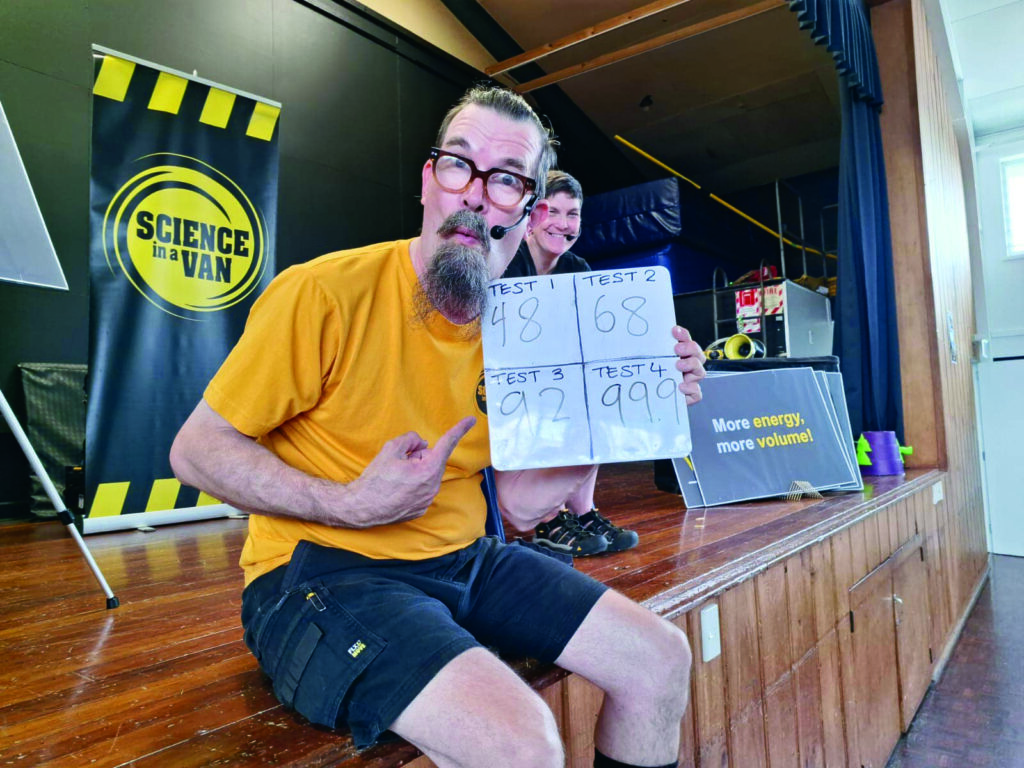
Science in a Van delivers high-quality, curriculum-aligned science shows. Schools benefit from the stress-free logistics, and no buses—Science in a Van brings everything they need.
With seven 45-minute shows to choose from, each blends humour, everyday objects and memorable demonstrations with clear scientific explanations, helping students deepen their understanding of different topics and the nature of science.
“We consistently hear that our shows boost science engagement for students and teachers. Humour definitely helps, and so do giant bubbles and rubber chickens flying on water rockets! We love mixing laughter with learning because it helps the science stick. I think we’re relatable too as we’re always asking questions alongside the students and we’re never afraid to say when we don’t know something. Instead, we talk about how we might figure it out together—and that’s what scientists do.” Emily Worman, Science in a Van Co-founder & Science Communicator.
“Over the years, we have seen school science programmes go from strength to strength, and it’s always a joy to celebrate that journey with teachers, especially with the schools we visit every year. Teachers are the ones doing the deep-thinking mahi with their students week after week and we’re lucky enough to provide shows that enhance and celebrate the learning they’ve planned.” Alan Worman, Science in a Van Co-founder and Science Communicator
With curriculum changes underway, the Science in a Van team remains committed to delivering joyful, relevant, accessible, high-impact learning experiences to primary and intermediate schools across Aotearoa.
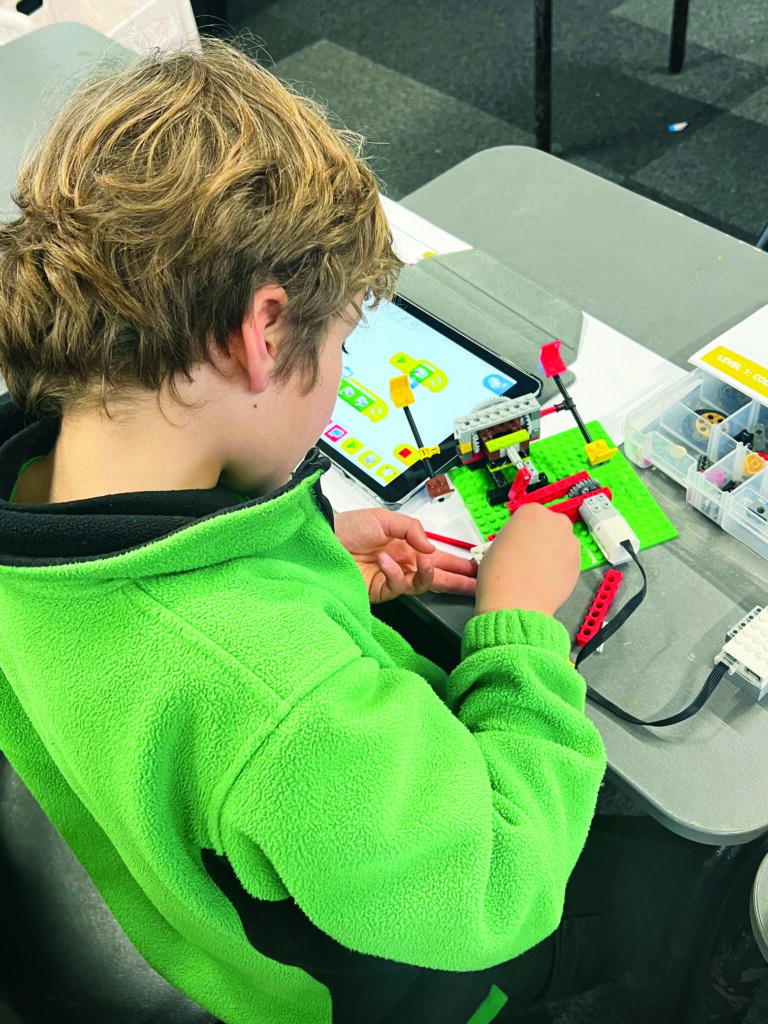
Bricks 4 Kidz partners with schools to deliver immersive, hands-on STEAM experiences that help students build the skills needed for a world driven by innovation and technology. Through LEGO® engineering, robotics and coding, children learn by doing—exploring concepts that spark curiosity, creativity and deep engagement.
In-school programmes are fully aligned with each school’s term learning outcomes and are supported by comprehensive teaching materials that strengthen understanding of engineering principles, scientific thinking and new vocabulary. Every lesson links learning to real-world applications, showing students how the concepts they explore through play are used by engineers, designers and innovators every day.
Bricks 4 Kidz after-school programmes further extend students’ learning through play-based exploration of robotics and coding. As children design, build, test and refine their creations, they develop creativity, logical reasoning, perseverance and confidence in their ability to solve problems.
Across all partnerships, Bricks 4 Kidz aims to nurture imagination, encourage resilience and empower young minds to think like future innovators — all through hands-on, playful learning that makes STEAM meaningful, accessible and fun.
Related School News story: Arts, culture and recreation positive for the wellbeing of rangatahi
Makerspace NZ has become a key partner for schools seeking to strengthen STEAM learning by providing not only advanced fabrication equipment—such as laser cutters, CNC routers, and 3D printers—but also the training, support and ongoing technical service needed to embed these tools meaningfully into teaching. Makerspace NZ emphasises long-term partnership rather than one-off supply: schools consistently highlight the value of comprehensive setup, staff training, responsive maintenance, and reliable access to parts and consumables.
These partnerships enable schools to shift from traditional, prescriptive technology programmes toward learning that integrates creativity, engineering, digital design and problem-solving. Schools report wide adoption across subjects, with projects ranging from prototyping and product design to environmental signage, leavers’ gifts, and whole-school initiatives.

Makerspace NZ also contributes to the wider “maker” ecosystem through user communities and social-media groups that support peer learning and idea-sharing. The result is a scalable and sustainable model for STEAM education; one that lowers barriers to advanced technology, builds teacher capability, and fosters a culture of innovation where students can design, create and iterate with real-world tools.
Making STEM engaging, accessible and easy to deliver is at the heart of the Wonder Project’s mahi. Since 2018, it’s supported 160,000 ākonga across 5500 classes with free programmes that combine curriculum-aligned learning with hands-on activities like launching rockets or creating ice cream, taking the stress out of planning relevant STEM lessons that stick.
Alongside scaffolded ākonga learning material and a challenge guide, the Wonder Project supplies kaiako with high-value STEM teaching equipment, free. Plus, everything sent to the school is theirs to keep and reuse to continue delivering impactful learning for years to come. Where possible, each class is paired with an industry professional who joins classrooms to build confidence along the learning journey, share their passion, and become a role model to rangatahi.
After their 2025 experience, 96 percent of kaiako reported their ākonga were engaged with the programme. All programmes are inclusive by design, ensuring all learners, especially girls, Māori and Pacific Peoples, see themselves represented in STEM, and believe they can do anything they set their mind to.