
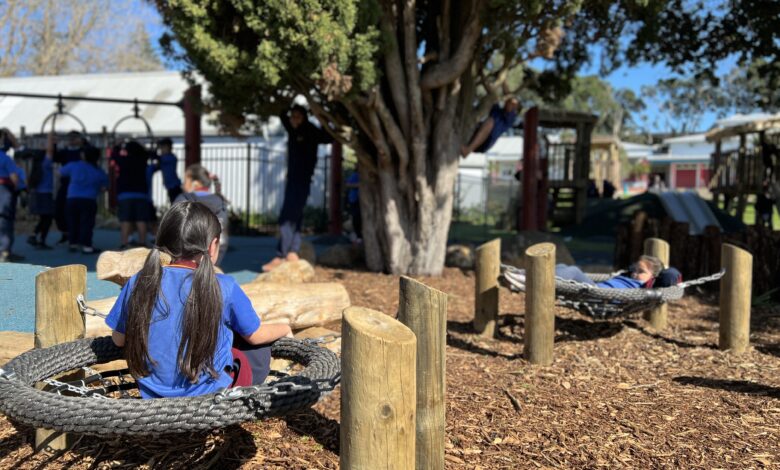
Outdoor play is an important part of the school day, and playgrounds provide the perfect vehicle for students of all ages to learn and explore.
As schools continue to invest in their grounds, the focus is increasingly on creating outdoor areas that are practical, inclusive and able to be used year-round.
Read the latest print edition of School News online HERE
From playground design and age-appropriate equipment to shade structures, we’ve spoken to the experts about key considerations for schools planning new playgrounds or upgrading existing ones.
Playgrounds that support connection and inclusion
Reuben Maybury, Playground Designer at Playscape
In my experience, the most successful playgrounds begin with careful listening, understanding the principal’s vision, valuing the students’ ideas, and maintaining an open dialogue throughout both the design and build process. Involving students in this way fosters a sense of pride and belonging, transforming a playground into a distinctive space that sits naturally within the school grounds.
When designing an inclusive playground, it is essential to consider physical abilities, sensory needs, and the diverse ways children think and learn. This ensures every student can engage with the space safely and meaningfully. A thoughtful balance of energetic play, shared challenges, and quieter moments supports children’s social, emotional, and physical development, while also encouraging curiosity and imagination.
New Zealand’s rich cultural heritage and varied landscapes also provide strong inspiration for design. By incorporating local stories, symbols, and natural elements, playgrounds can foster a sense of place and identity, helping students feel connected to their environment. Nature itself is a powerful teacher; logs, rocks, planting, and varied terrain invite exploration, problem-solving, and resilience.
Ultimately, a well-designed playground offers far more than enjoyment. It nurtures friendships, confidence, creativity, and empathy. It is a place where students can play independently or together, safely test their limits, and create lasting memories. For me, the most rewarding aspect is seeing students take ownership of the space and watching it come to life through their curiosity, energy, and imagination.
Choosing equipment and surfaces that work long term
The Park Supplies & Playgrounds design team
What factors guide playground equipment selection, and what design trends are emerging?
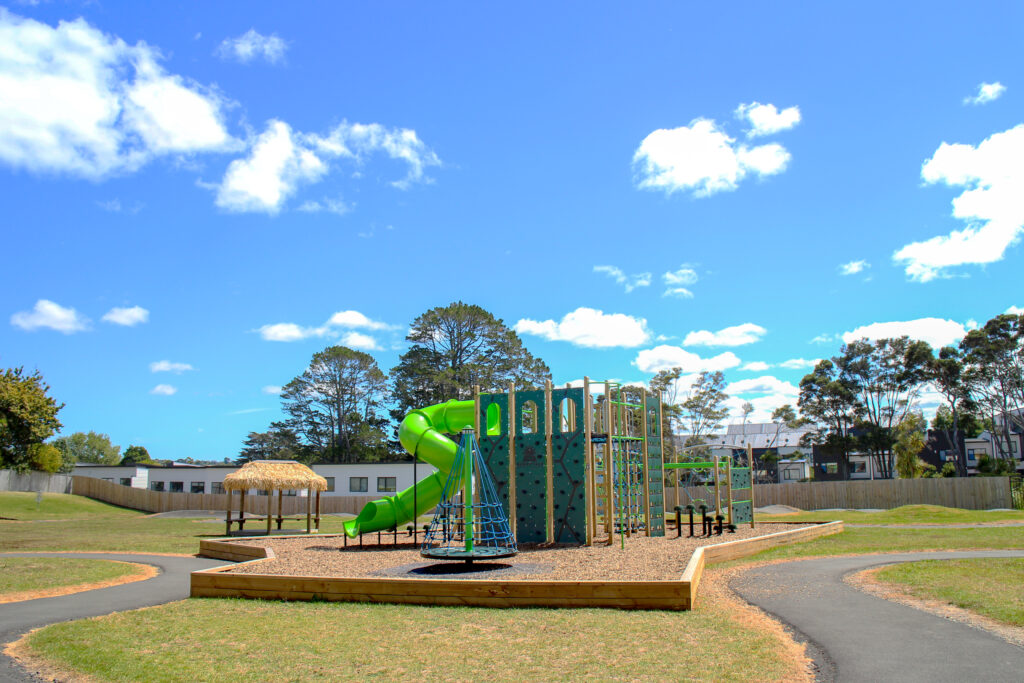
Equipment selection is primarily guided by the developmental capabilities of students across different age groups. For schools, this often involves balancing junior playgrounds that focus on lower deck heights and foundational motor skills with senior playgrounds that introduce higher-energy equipment and more complex physical challenges that children can grow into over time.
Selection is also driven by the need to create a well-balanced play environment. This includes incorporating a mix of play types, such as physical play through climbing, swinging and sliding, alongside social play that supports unstructured, imaginative and cooperative interaction. Sensory-rich and inclusive play options are increasingly important in ensuring the space engages a wide range of students with different needs, interests and energy levels.
Related School News story: Maintaining trees for thriving outdoor areas
Play value is another key consideration, with equipment assessed for its cost-effectiveness relative to the variety of play experiences it offers and its ability to engage a high volume of users at once. High play value ensures the investment benefits as many students as possible across diverse interests and abilities.
In terms of current trends, there is a noticeable shift away from traditional vertical tower structures towards horizontal play elements, such as low-level climbing circuits. This approach encourages movement across the playground rather than drawing children to a single high point, improving circulation, reducing congestion and supporting safer play.
Schools are also increasingly incorporating cultural personalisation into playground design, including Māori and Samoan language elements, to reflect local identity and community values.
How can playgrounds be designed to support inclusive play for diverse needs?
Inclusion goes well beyond the provision of wheelchair access. Playgrounds should be designed to respond to neurodiversity by creating sensory-rich environments with clearly defined zones. This often involves balancing high-energy play areas with quieter observation points or sheltered spaces, allowing children who may feel overwhelmed to regulate their sensory experience while still feeling connected to the play environment.
We also encourage the inclusion of equipment that supports a variety of sensory inputs, such as music play stations, sand play areas and nature play elements that offer tactile and auditory stimulation. Social inclusivity is addressed by designing playgrounds that are not dominated by high-intensity sport or competitive play.
By incorporating equipment with varying levels of difficulty within the same play circuit, children of different abilities are able to play side-by-side, each engaging at a level that suits their confidence, capability and comfort.
What should schools consider when selecting playground safety surfaces?
When advising schools on safety surfacing, we encourage them to consider both play value and movement flow across the space. For example, certified woodchips are well suited to large areas with static play equipment, while wetpour rubber allows for the creation of vibrant designs, ground games and clearly defined safety zones around high-motion equipment.
Related School News story: Using Te Whare Tapa Whā in outdoor adventure programs
Schools are also encouraged to take a low-maintenance approach to design by placing surfaces strategically to prevent wear paths and selecting materials that reduce the migration and cross-contamination of loose-fill safety surfaces.
Rubber tiles are particularly valued in high-wear areas due to their durability and ease of maintenance, as individual tiles can be replaced if damaged, reducing long-term upkeep costs.
Extending outdoor learning through shade and shelter solutions
Katrina Evans, Marketing Manager at Archgola
How can canopy and shade structures support outdoor learning and group activities year-round?
Canopies make outdoor learning practical in sun, wind and rain. When a covered area is set up for learning or study, with the shade protection from UV rays and shelter from rain showers, schools can confidently plan to use the space without the worry of weather disruption. The semi-enclosed spaces are great for group breakout work, and the natural setting often encourages a relaxed environment for teamwork and communication.
Students who may feel restless or confined indoors may benefit from the change in scenery, potentially leading to improved concentration and better learning. The flexibility of this space can also be used for lunchtimes, parent meetings or small community events.
Schools are looking for adaptable infrastructure as they plan for the future, and this can be achieved with a shelter or canopy in a more cost-effective way than costly renovations.
What role do covered walkways play in supporting safe and efficient movement between classes?
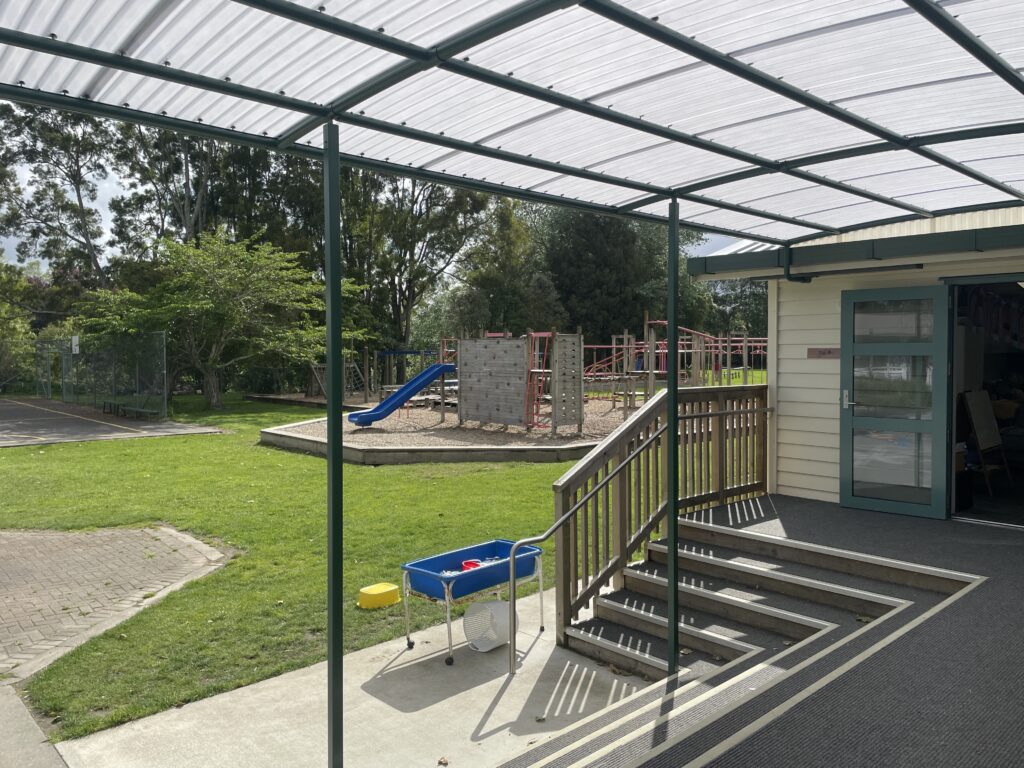
Covered walkways provide consistent protection from the rain and sun, allowing students and staff to move between classrooms with ease, whatever the weather.
A defined walkway provides a smoother transition between classes. They can be especially beneficial for students with mobility challenges or injuries, as the pathways will be dry and easier to navigate year-round. These covered areas also offer protection for school bags hung outside of the classroom, keeping the contents dry and lunches cool.
Are there some important considerations for schools when choosing shade solutions for year-round outdoor use?
When selecting shade solutions for your school, a combination of year-round usability, long-term durability and aesthetic design will be front of mind.
Shade solutions should be designed to block harmful UV radiation, particularly in areas where students spend extended periods of time, such as play spaces, outdoor classrooms and eating areas. Adding outdoor blinds can also extend the use of the space—consider whether you primarily want extra shade from mesh blinds or extra wind and rain protection from clear PVC blinds. These can be added at a later stage if required to spread out the school budget.
Consideration of durability and weather performance is equally important. Schools need shade solutions that can withstand wind, rain, and ongoing daily use. Discuss the guttering, flashings and water flow management when planning your shelter. You may take the opportunity to capture rain from the canopy roof into a water tank for the school enviro-garden.