
Research suggests that over half of New Zealand’s children experience at least one Adverse Childhood Experiences (ACEs) by the time they are just 4.5 years old.
The effects of trauma are well-described but not always tangible in the classroom; trauma-informed education is becoming an increasingly popular way to help students who may struggle at school and beyond.
School News spoke to Warren McLeod, Executive Manager, Education at Cire Community School, an alternative education provider in Melbourne, Australia, to find out more about how schools can ensure student success and wellbeing through a trauma-informed approach.
Read the latest print edition of School News online HERE.
Can you share a bit about the context of the students who enrol at Cire?
A large cohort of students who attend one of our school campuses have been and continue to be impacted by trauma and Adverse Childhood Experiences (ACEs) and often find mainstream school settings challenging.
Due to the demands placed on educators, particularly in traditional mainstream secondary school settings, where students have many teachers in one day, it can be an almost impossible task to cater for the unmet needs of every student in every classroom. At Cire Community School (Cire), our approach is one of Soft Hearts and Hard Feet. Wellbeing and teaching and learning are equally important, and we meet our students where they are on any given day at any given time. Our young people know that we will walk alongside them and offer support and practical strategies that will not only assist them in the classroom but in life outside of school.
Related School News article: The behaviour problem: Standardised curriculum, standardised tests, standardised…. behaviour?
Many students who join Cire arrive with a negative connotation of education due to carrying unmet needs, fractured trust, and overwhelming experiences from previous school settings. These and other related childhood events all contribute to the varying degrees of trauma in a young person’s life. Therefore, there is no atypical type of trauma but rather each student carries their own personal story and experiences with the impact varying.

How might a day in a classroom at Cire look different to one in a mainstream setting?
At Cire, what you experience when you enter a learning space at any of our campuses is likely to look, sound, and feel different to what you may expect based on your own experiences in a more traditional mainstream setting. Evidence-based, trauma-informed practice is a key element of our school and we aim to provide consistent, predictable routines that support the needs of our young people and provide a safe learning environment.
Consistence and predictability help us to support young people who may not experience this in any other aspect of their lives.
It reduces the need for students to remain in a constant state of fight, flight, fright, and freeze mode while they are at school and this in turn reduces their stress levels and optimises opportunities for them to have a positive educational experience.
You will not see identical programs, goals, and student outcomes in our learning spaces. On the contrary, what you see in one space may differ from another. This is often dependent on individual teaching styles, staff roles and responsibilities, year levels and subject areas. It is through our practical strategies and use of shared language that we strive for consistency as we attune to the needs of our students.
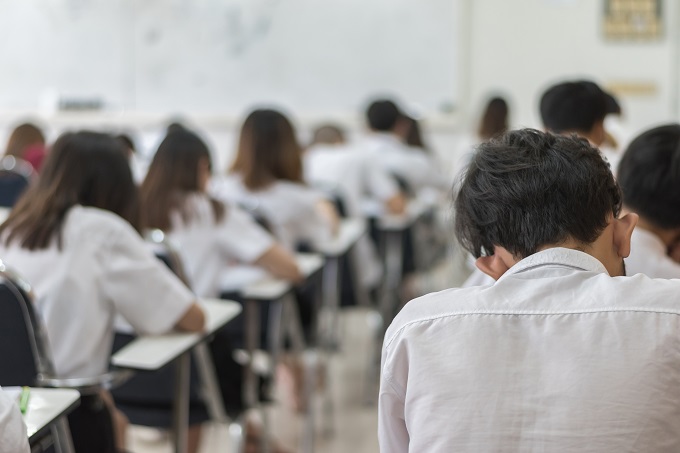
A great example of this is engagement. There are 3 core types of engagement: behavioural, cognitive, and emotional (Fredricks, Blumenfeld, & Paris 2004). Just as silent learning, where students appear to be busy, doesn’t necessarily equate to them being cognitively engaged in their learning, a classroom buzzing with movement and noise doesn’t always imply that students are not meeting learning outcomes and have lost focus.
Related School News article: From Stress to success: Supporting teacher and student wellbeing
Depending on the learning intentions, tasks, and student needs, you may notice a warm undercurrent of conversation between students and educators, young people respectfully challenging the thoughts and ideas of other students and staff, a fluid mix of dialogue and movement, or a low and thoughtful buzz. Our staff plan, deliver, and make necessary adjustments to ensure students are authentically engaged in learning.

In regard to the physical learning spaces, you will often see low lighting, flexible working spaces including standing desks, beanbags, pods, and memory foam mats. These are all deliberate and carefully curated to support the varied sensory needs of our students.
Trauma is a broad umbrella, but what is the current thinking around general strategies that can be used to support students who’ve experienced trauma at school?
Forming positive relationships is foundational. Before meaningful learning and engagement can take place, an authentic relationship must be developed between staff and students.
Only once a young person feels a deep sense of connection, belonging, and safety can we create an environment that is ideal for learning.
Dedicating explicit time to build such relationships must occur prior to staff setting high expectations for learning. Creating safe spaces that promote learning while meeting students where they are is foundational to what we do at Cire. Our school environments and classrooms are carefully designed to provide spaces that support emotional regulation, develop emotional intelligence, encourage healthy risk-taking, and model strategies that promote positive learning experiences.
What are some things that teachers should consider when planning support for students who have experienced trauma?
Firstly, it is important to note that it is not just teachers who need to build relationships and offer support to students. Every adult working within our educational setting should be equipped and have a clear understanding of our structures, philosophy and approach to working with trauma impacted young people (this includes teachers, principals, learning assistants, bus drivers, administration and wellbeing teams).

When a young person arrives at school in the morning, often they have not yet had any positive interactions with an adult. Sadly, many young people who have experienced trauma don’t have consistent, predictable adults in their lives and their first point of positive interaction doesn’t occur until they begin their journey to school.
Our bus drivers will often be the first familiar face that a young person meets in the morning; they are a key element of our approach. If a student arrives late, the first person they are likely to see won’t be their teacher but may be a member of the admin team in the front office or a member of the leadership team who are often out on the school grounds greeting students as they arrive.
There are many key skills that all staff should acquire when working with young people with complex needs. Being able to bring a young person into your calm, rather than meeting them in their escalation or chaos in a critical moment. This also requires staff to consistently hold each student in unconditional positive regard.
What kind of impact can trauma-informed education have on students?
Trauma-informed practice can have a profound impact on a young person and while we may never be aware of it at the time, as these moments often occur further down the track, you have the opportunity and influence to have a significant impact on a student’s future trajectory.
The studies around the impact of Adverse Childhood Behaviours (ACEs) on a young person’s development and future wellbeing are extensive. Just as traumatic events shape a young person’s neurological development, the cumulative number of ACEs can predict the likelihood of later mental health challenges and a wide range of chronic health conditions (Felitti et al., 1998).
Trauma-informed education isn’t just about supporting young people who have been impacted by trauma. It’s a practice that benefits every young person and every adult.
The strategies and skills that a trauma-informed education model develops, nurtures and supports every person. These are life skills.
It’s a model that allows us all to develop our emotional intelligence, identify personal stressors, and explore approaches that allow us to successfully regulate our emotions.
We learn how to prepare for the unexpected and ensure that we are better equipped to cope when our plans fall short.
Cire has existed for 50 years, over which time understanding of trauma has developed substantially. How well do you feel Australia is doing in terms of trauma-informed education, and what would your wish for the future be?
The Special Assistance School (SAS) sector is the fastest growing education sector in Australia (enrolments grew by 21% in 2024–25 alone) which has certainly increased the awareness of trauma-informed practice across the country.
Cire envisions communities where everyone is empowered to reach their potential. By delivering flexible, trauma‑informed education, we can better meet young people where they are, restore a sense of safety and belonging, and empower learners to define their own futures.
Australia has made meaningful progress in recognising the importance of trauma‑informed education, particularly in awareness and intent. However, practice is inconsistent and too often dependent on individual schools or educators rather than being embedded system‑wide.