
New school Ormiston Junior College is doing things differently.
Flat Bush, home to Ormiston Junior College (OJC), is one of Tāmaki Makaurau Auckland’s newest and fastest-growing town centres. Located to the south-east of the CBD, Flat Bush lives up to its name. A newer residential area, the suburb is mostly comprised of medium density townhouses—three to six per lot—or slick new-builds raised neatly along flat, wide roads. Some lots are still under construction, steel scaffolding and plastic sheets creating a cocoon around future family homes and communities. Yet others are still vacant, overgrown with long grass, scrubby mānuka and elegant harakeke—reminders of the suburb’s planned growth.
Read the latest print edition of School News online HERE.
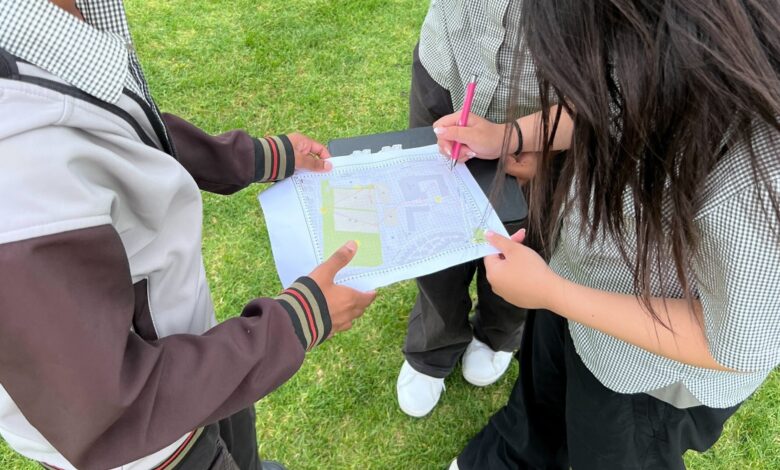
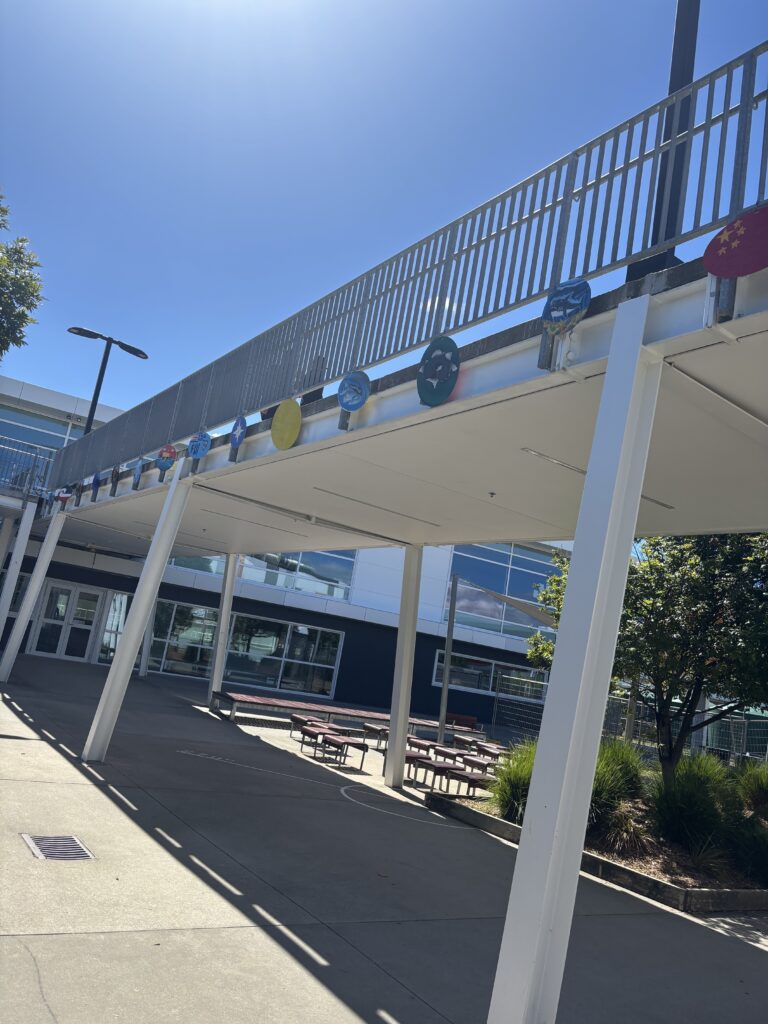
Just off the main road in the burgeoning town centre lies Ormiston Campus, home to three schools: Ormiston Primary School, OJC, and Ormiston Senior College. The primary and junior schools share one board, and though all three have separate buildings, the campus is connected by one long pathway: Te Ara o Toitehuatahi. The name was gifted by mana whenua, Ngāi Tai ki Tāmaki, in reference to their tūpuna, the navigator Toi Te Huatahi, who came to the area from the East Coast.
Navigating uncharted waters
“Everyone’s navigated their way here somehow…some from across Auckland and the Pacific and some on a plane from Mumbai or Shanghai.
“We felt that navigating the self, navigating others, and navigating beyond was something we want our kids to learn at OJC, so we’ve aligned that with the names of the places on campus.”
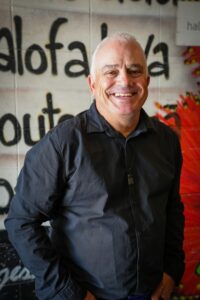
Luke Sumich is the Leader of Learning (Tumuaki | Principal) at OJC, which opened its doors to students in 2017. Since opening with less than 200 students, the school has grown dramatically alongside the Flat Bush population. Already a large school with a roll close to 1500, there are plans to increase capacity as the population grows, and a new wing is under construction.
Between 2023 and 2025, the wider suburb grew by around 11,000 people, or almost 20 percent. Much of this growth comes from migrant populations.
Tāmaki Makaurau Auckland is ranked among the world’s “superdiverse” cities, a concept which describes urban centres shaped by successive waves of immigration. In Tāmaki, less than 50 percent of the population identifies as Pākehā, compared with almost 70 percent for wider New Zealand.
But there are variations in diversity even within Tāmaki, and Flat Bush has one of the highest migrant populations in the city. Here, only 14.7 percent identify as Pākehā; 5.7 percent identify as Māori, compared to 17.8 percent nationwide; 12 percent identify as Pasifika, compared to 8.9 percent nationwide; and 71.6 percent identify as Asian, compared to just 17.3 percent nationwide.
As demographers often note, however, Asian is a broad category which covers a whole continent. Vietnamese, Cambodian, Indian, Malaysian, Thai, Laotian—these are just some of the whānau that walk Te Ara o Toitehuatahi. The school finds strength in its diversity, and the staggering number of ethnicities and cultural heritages in Flat Bush combine at OJC to create a uniquely Aotearoa New Zealand community.
“A lot of people ask about our ethnic breakdown,” chuckles Sumich. “I say, look, go to your letterbox, look left, look right – that’s your ethnic breakdown. There aren’t a lot of blonde students…that’s life. It’s a great area of new New Zealanders from right around the world.
“People are very accepting of all things culturally responsive because they come with a strong cultural background already and understand the value of having depth in your own culture. It’s a beautiful community like that.”
New communities, new schools, new approaches
Even before setting foot on campus, it’s evident that Ormiston Junior College departs from traditional models of school seen in New Zealand.
For one, the Junior College model, which serves students from Years 7 to 10, isn’t common across the motu. In addition, learners at Ormiston Junior College are not usually split by year-levels. Instead, most learning happens in small, mixed-level groups.
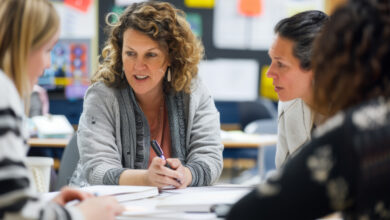
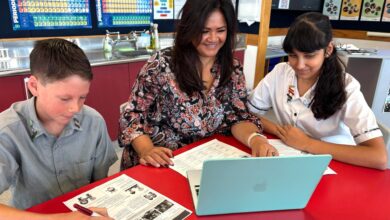
The most important of these is a student’s “mentor, advisor, coach”, or MAC group. Each group is led by a MAC teacher who acts as the student’s primary contact and guides the learner through their whole journey at OJC. In turn, these MAC groups are clustered into one of six Kāinga: large, open-plan spaces which act as a home-base. Each Kāinga was gifted a name by Ngāi Tai ki Tāmaki which honours indigenous navigational guides like Whetū (stars), Aumoana (ocean currents) and Manu (birds).
Learners attend their MAC classes for 40 minutes to an hour each day. The groups focus on monitoring students’ progress and achievement, setting goals, and self-management and learning skills (metacognition). Progress is measured using a digital badging system. Each badge earned demonstrates a student’s proficiency in an area of the OJC graduate profile.
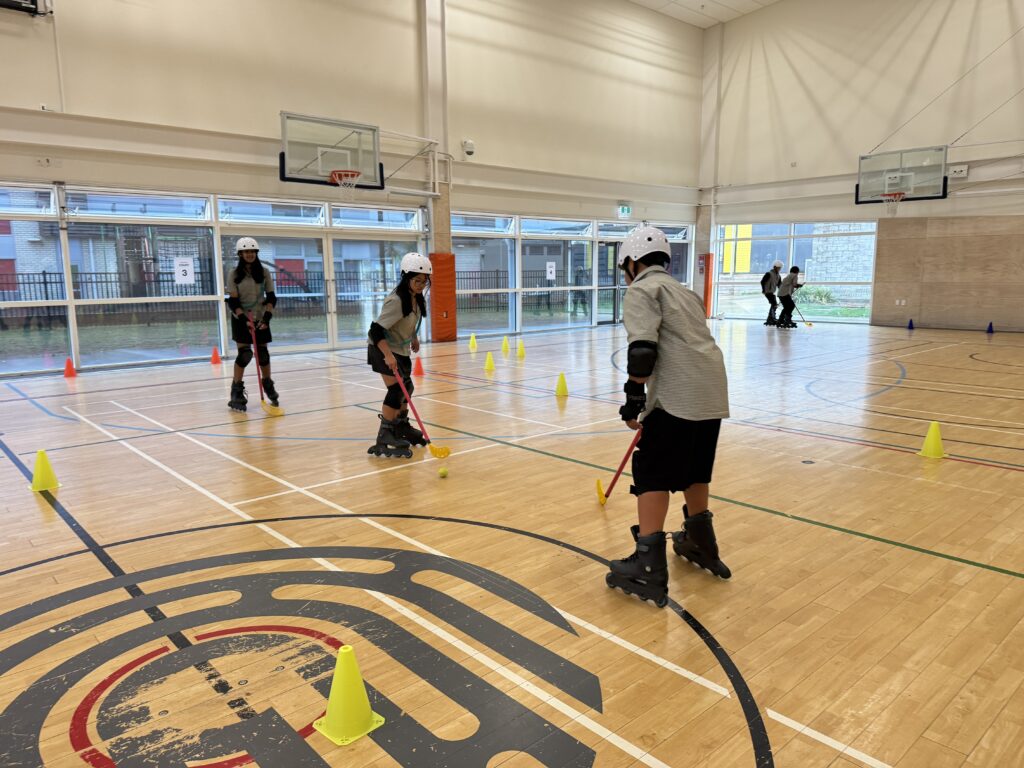
Sumich explains: “We wrote a list of things we thought our students should, or could be able to achieve, and then we put some criteria to it. If you’re an 11-year-old, it would look like this, but if you were a 15-year-old, since it would be more complex, it would look like this. Then we turned them into badges.”
In 2025, learners at OJC could earn “emerging”, “effective”, or “exemplary” badges in areas such as hauora, whanaungatanga (relationships), integrity, innovation, inspiration and excellence. Badges may cover academic subjects such as social studies, sciences or the arts, or soft skills like critical thinking and communication.
For instance, to earn an Inspiration-Wana 1 badge, senior students must “evaluate the characteristics, purpose and function of the arts by comparing and contrasting how they are made, viewed and valued in a range of contexts (social, historical, political, cultural etc)”. Junior students may earn the Relationships–Whanaungatanga 3 badge by “communicating actively with people from different cultures.”
Though time is earmarked through the day for more traditional, or recognisably academic subjects like literacy and numeracy, the focus on personal characteristics and soft skills during MAC time is deliberate, and aligns with the school’s vision and values, says Sumich.
“If I said to you, what do you want your young person to leave school with, and you wrote a list of the characteristics and skills you wanted them to leave with—would they all be academic things? As a Dad, I want my son to be able to look someone in the eye, and make a promise and keep it,” says Sumich.
“I think New Zealand is unique enough to be able to say we care about a bit more than just your academic outcomes.”
That’s not to say OJC isn’t concerned about academic outcomes, but rather that student achievement isn’t always measured with standardised tests and exam scores.
To earn badges, students don’t write essays or answer multiple choice questions. Instead, they give a presentation, providing evidence and speaking in front of a panel of peer assessors and their MAC teacher. In many ways, it’s a more academically rigorous system than using standardised assessment, argues Sumich—after all, it mirrors the process of a PhD defence.
“When you go for a PhD, you have to sit in front of a panel and defend it by explaining as the panel asks questions. You don’t just hand in a paper and ask for a PhD—the whole talk through and demonstrating understanding is the ultimate test. That’s the highest academic achievement, and in some ways, we’re replicating that for our kids.”
“Badge-bidding”, as it’s known, is designed to test deeper understanding, says Sumich. Students can use AI to write an essay, or fudge the multiple-choice questions through smart guesses.
Additionally, having a panel of mixed-level peer assessors ensures students are receiving and understanding feedback. Every student has the opportunity to both present and assess, and so each student develops the ability to evaluate their own, and others’ work while forming communication skills and working relationships.
“Being able to receive feedback instantly is valuable, and there’s an integrity built into the badge-bidding system. Students can feel their assessment means something,” says Sumich.
Learning for the real world
Ormiston Junior College’s emphasis on soft skills and metacognition departs from traditional academic conventions of the school system. Sumich is aware of this fact, and of the eyebrows it may raise. But though wary of detractors, Sumich is ultimately uninterested in convention.
“School is for every child, it’s not just for those that are going to do well academically,” says Sumich.
He cites one of his favourite quotes as being said by Peter Fraser, the New Zealand Prime Minister in 1935:
“Every person, whatever his or her level of academic ability, whether they be rich or poor, whether they live in town or country, has a right, as a citizen, to a free education of the kind for which they are best fitted, and to the fullest extent of their powers.”
For the team at OJC, that means aiming to set students up with concrete, transferrable life skills they will use no matter where they go, whether that’s senior college and higher learning, or the workforce and family life. This means learning at OJC is designed to be tailored to a variety of needs, contexts and outcomes, which is no small feat.
Though Sumich acknowledges there is always room for improvement, there is a sense of pride in what the school’s innovative approach has already achieved for many who come through OJC.
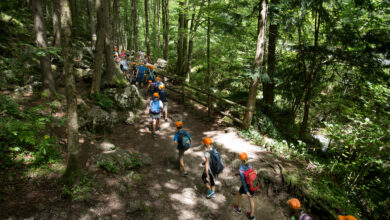
At the time of School News’ visit, OJC is preparing for the Year 10 trip up north, where students will stay on multiple marae and explore history and culture over four days as part of the social studies curriculum. Some students are hesitant to go due to time and/or cost. But Sumich is determined to get as many students on board as possible, especially those who are reluctant.
“You’re coming,” Sumich tells one student, who says he doesn’t want to take time off work. Sumich is undeterred.
“I need you on the marae, I need you playing cards in the wharenui, laughing. You bring the mana. The reason I’m doing this is for you; the reason I go on the road trip is for you.”
“Seriously?” The student asks, sitting up, responding to the urgency in Sumich’s tone.
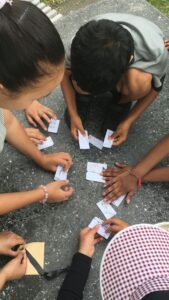
Though a social studies trip may not seem entirely relevant to the young man, who is already employed in the trades, Sumich is deadly serious about needing him on the trip. It offers the sort of community and social experience that is vital to developing those socioemotional and relational skills that will remain salient no matter where the student goes after graduation.
Those skills are also the basis for citizenship and community building, which are difficult to assess, define and measure, but are no less important than literacy or numeracy, believes Sumich.
Related School News story: Chisnallwood Intermediate: A place of opportunity
This is just one example of the “personalised world-class learning” at the heart of OJC’s vision statement, and it looks different for every student. For that student, experiencing a school trip, engaging with his peers, and experiencing pride in his cultural heritage will stand him in good stead for the years ahead.
Meanwhile, we also pass a young lady finishing her presentation on the environment. The older students assessing the presentation award her an “effective” badge, because an “exemplary” would warrant more in-depth explanations. She nods at the award, happy with her assessment as she collects her things for morning tea.
“At the start of the year, she was so anxious she didn’t want to come to school. This term, her attendance is 100 percent,” says Lesley, her MAC teacher.
“Normally she’d have had a test and get a high percentage score—she’s a diligent student,” Sumich adds. “She could probably have done her spelling and reading tests and got a high result, but that’s not what it’s all about. Giving a presentation is really pushing her.
“Having to talk about her learning has given her so much confidence, especially for a student who, six months ago, couldn’t even get out of the car and take a step inside the building. That’s huge growth.”
And it’s that personal growth and achievement—developing the skills, strategies and abilities relevant to each individual young person’s life—that OJC believes