“We want better for our children”: why Auckland educators are striking
Teachers, education leaders and support staff at Auckland’s “mega” public service strike tell School News why they’re marching.

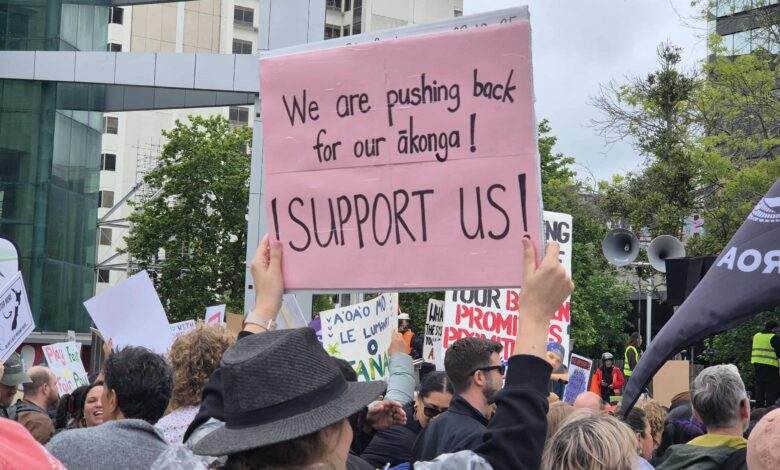
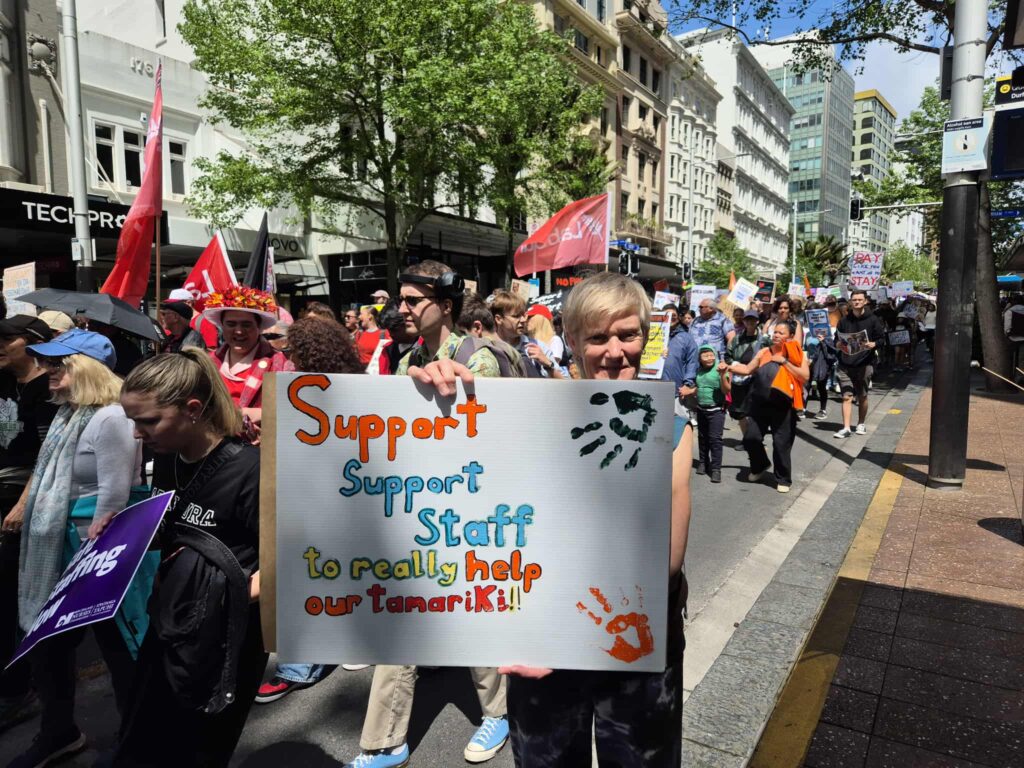
The crowd was estimated to be in the tens of thousands at Tāmaki Makaurau Auckland’s public service “mega” strike which marched down Queen Street yesterday (Thursday, October 23) – many of them educators striking for better pay and conditions.
The march, which began at midday from Aotea Square, kicked off with speeches from union organisers addressing a completely full square, with crowds spilling onto the surrounding street. The crowd then marched down Queen Street toward Te Komititanga Square (Britomart), at one point completely filling the kilometre-long stretch of the CBD.
Read the latest print edition of School News online HERE.
Addressing the crowd, secondary teacher and regional chair of PPTA Te Wehengarua Paul Stevens called it a “historic moment – to stand together here as a public sector, as public sector workers.”
NZEI Te Riu Roa support staff representative Ally Kemplen, from Newton Central School, said “Support staff in schools have never been on strike before and we can’t afford to lose a day’s pay but we can’t afford to not make any noise.
“We’re here because… we have been at the bargaining table for a year and the last offer was so bad we didn’t take it to our members because it would have been insulting to them… The only way to make them shift is with your voices, and with you making noise and you not giving up for all of us, and ultimately for our children because that’s the reason we do it.”
Related School News article: More teachers join October 23 strike
Across the country, an estimated 100,000 public sector workers went on strike. Of those, 40,000 were primary and secondary teachers – almost a quarter of all 150,000 registered and certified teachers in New Zealand.
School News was at the Auckland strike. Below, educators tell us why they’re striking.
Nikita Tapora, Waterview Primary School teacher.
“We want better for our children. Our classrooms are pretty hard to manage at the moment with the amount of special needs, all the stuff the Government is trying to make us do like assessments for the sake of assessments. We are really getting run down and tired trying to provide the best education for our kids. We want them to show they value education because the kids we’re educating are the future leaders of our country.”

Danielle Katavich, Weymouth Primary School deputy principal
“I’m striking here today for the conditions teachers are working under. We need more support for the students in our classrooms so they can achieve their potential.”
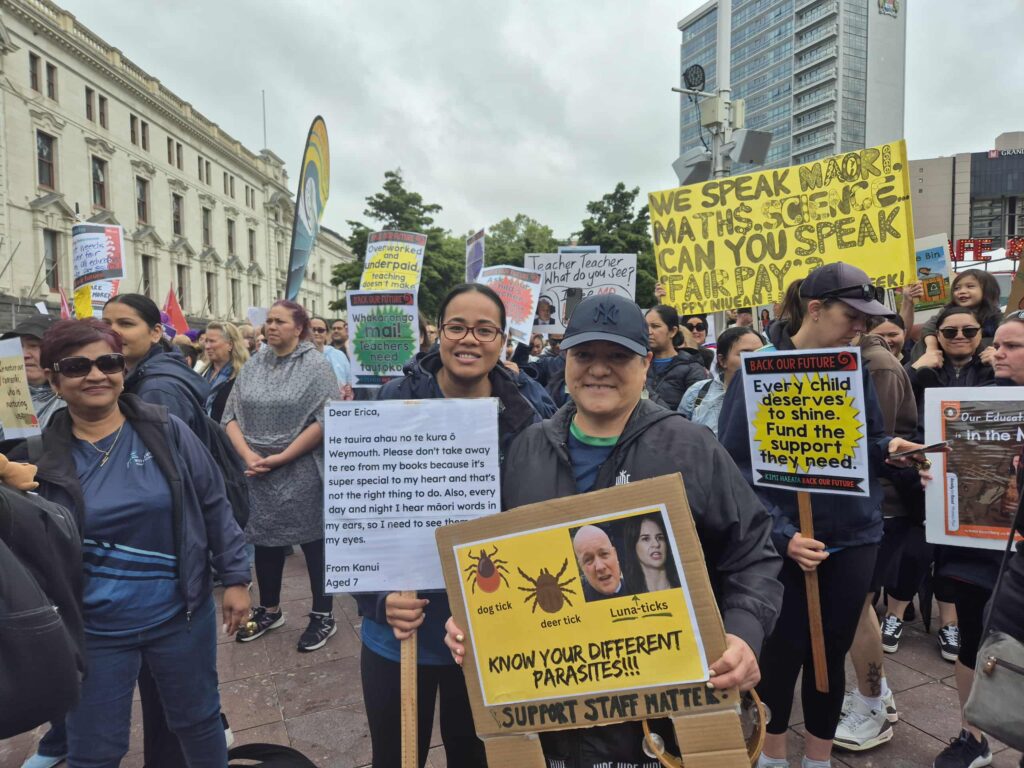
Caitlin Rive, secondary school teacher
“I’m here as a teacher, for all teachers and kids… not only because I’m upset and offended by the Government’s offer but because I think we need to stand for something bigger. This Government doesn’t seem to value people. Teachers are forced to leave Auckland because they can’t afford to live and teach here, and beyond that many are leaving New Zealand, which we don’t want to do because we care about our rangatahi, our whānau and our whenua. As a teacher I’m sick of people who have no idea what it’s like to be around kids and in the classroom, making decisions like they do. It’s unfair and out of touch.”
Kate Longmuir, secondary school English teacher
“We need to make teaching an attractive profession because we already don’t have enough teachers. A lot of the teachers we do have are beginning teachers, they don’t stay in the profession. We need to attract and retain teachers. Many say ‘I can’t do it anymore, I’m going to do something else’. In my school, in just one department, we’ve had three teachers move to Australia during the course of this year. It disrupts the learning of the students in their classes – but we all understand why they’re going.”

Kelly, Selwyn College art teacher
“I’m striking because of my workload. The amount of pastoral care increases every year, we have lots of students with diverse needs, and yet we don’t get paid for any of that pastoral care. Additionally, every year, the Government introduces more work and there’s never enough pay. I’d rather take a pay cut and a reduced workload.”

Caroline Chawke, Papatoetoe South School
“We’re striking today because our schools are absolutely under-resourced. We have a huge school community and a large number of students who need learning support, and money is being cut left, right, and centre for essential resources we need to support our tamariki to thrive. For that reason we stand together as a kura for improved conditions, pay equity and to ensure our tamariki and the future of New Zealand gets the best.”

Dave Rooney, Ormiston Senior College
“I don’t believe the Government supports teachers. I’d like them to come back in good faith and negotiate for better conditions for teachers. Teachers are leaving the profession in droves and the ones that are left aren’t happy. Look at any school in New Zealand – the amount of stuff that’s gone on since COVID is just atrocious, and the Government is pulling back services and staff training. Everything is underfunded.”

Simon, secondary science teacher
“I put in heaps of work in evenings, marking, prepping, and preparing. Weekends and holidays as well, and sometimes I even take sick days just to get the job done. The idea of extra callback days is stupid considering what I put in outside of normal school hours. And I think we need a pay rise that at least matches inflation rates.”
Joanna, primary school teacher
“We need teacher aides and support staff. The majority of the children at this time are COVID children and they’re not ready for school. I’m working in a junior classroom, and it’s impossible for one teacher to manage twenty-something children without a teacher aide.”
Olivia, Pt Chev Primary teacher
“The atrocities that our government has forced upon us, banning pay equity claims, giving themselves huge pay rises, overcrowded classrooms, underfunding, wanting callback days… I know so many good teachers who have left the profession from burnout.”

Melissa Grey, new entrant teacher
“We’re not receiving the funding we need to do our jobs properly. Our work conditions have gone way downhill under this Government. We don’t have the resources we need, the support we need to deal with challenging behaviours that we’re seeing in our classes, and we’re being worked more than ever with all these curriculum changes. To offer a one percent pay increase when they told us they were going to deal with pay equity through contract negotiations was really a slap in the face. We need better funding, we need to be better resourced, we need support in classrooms and better opportunities for professional development.”
Wendy Viki, Wairau Intermediate learning assistant
“I’m struggling – I’ve got myself and my son. Rents and food are going up… I’ve been in learning support for 12 years and I want my work and expertise and experience to be appreciated and financially recognised. [Learning support] wages are under administration costs – we’re competing with toilet paper and technology – our wage needs to be shown separately.”
Peter, secondary physics teacher
“I want better conditions for our students, and smaller class sizes, so we can have staff with better mental health who are better able to perform our job and provide good service for our students. There’s a range of issues that young people have, and they need more support staff for their learning needs. It feels like they want to shove all the kids into one classroom and pay one teacher rather than considering individual students’ needs.”

Selvin Prasad, primary teacher
“I’m striking for more teacher aides and support staff in schools. They’re important in terms of class numbers and high needs students. One teacher isn’t able to meet all the needs.”
Claire, speech and language therapist
“It’s about our services being protected, it’s about paying people fairly for what they do, and ultimately it’s about ensuring the kids we work with, who have the highest level of need, are getting the supports they need.”
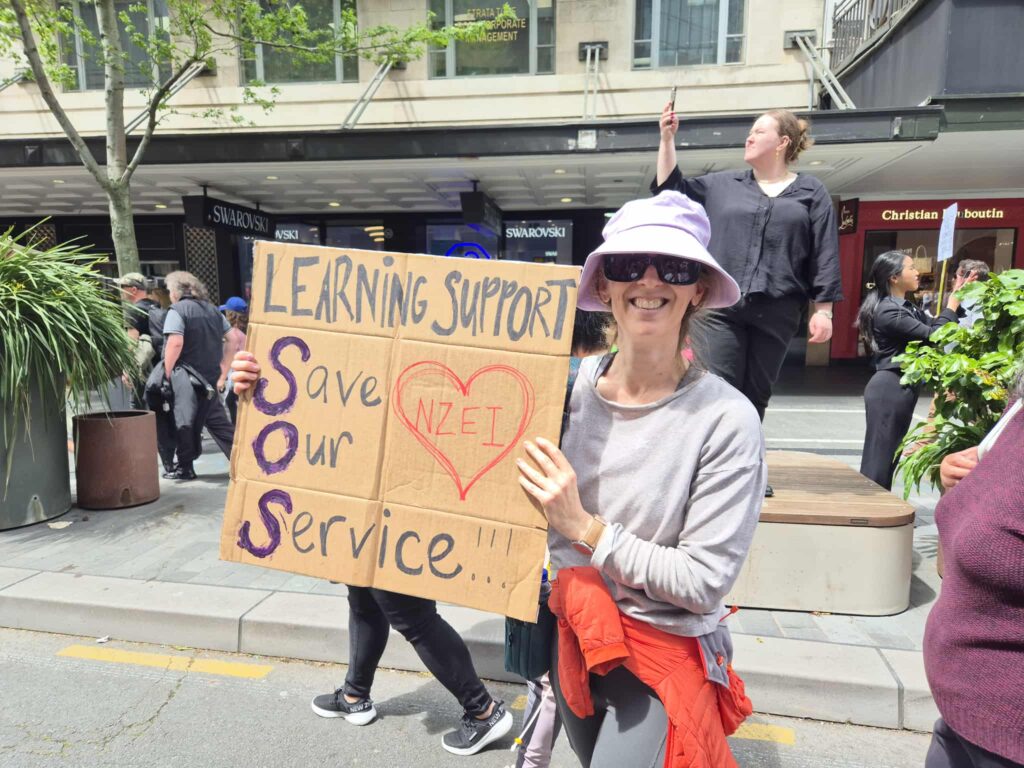
Aurora, Rutherford College English teacher
“Teacher aides would be wonderful, smaller class sizes, smaller teaching loads – these are all things that enable us to deliver a better education for our students. Time to mark and give appropriate feedback, time to sit one on one and support learners when they need it, being able to prep content that is engaging and useful. All these things take time and we don’t have the time currently to do everything and feel we are going a good job for our learners. There’s also been a huge spike in the cost of living, and we trained four years to do this and many of us are working ridiculous hours. It’s just not sustainable.”

Explore our latest issue…