
Warm weather and sunny days make going outside a very tempting prospect. But if your school doesn’t offer ample shady places for learning, playing, and relaxing, you might have to stay inside this summer.
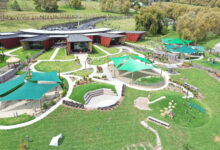
Shade structures, including covered learning areas, shade sails, umbrellas, and shelters can all be installed around your school. Protecting areas from sun, wind and rain, shade structures can improve the functionality of outdoor spaces, making them usable year-round and in all weather conditions.
Read the latest print edition of School News online HERE.
With the summer holidays not far away, now might be the perfect time to plan a shade structure project for your school.
Planning makes perfect
As with all projects, careful planning will ensure your shade structure is fit for purpose and lasts a long time.
When planning shaded areas, consider the orientation of the shade structure, and height and depth of the space to ensure UV radiation is blocked without making the space too cold. Also consider if falling leaves or branches from nearby trees might fall on the structure, and make sure any anchor points are not a trip hazard. Importantly, in Aotearoa New Zealand, structures should provide warm shade, rather than eliminating the heat of the sun altogether.
Related School News article: Tree maintenance for safe, good looking green spaces
Katrina Evans from Archgola said when planning for long lasting shade solutions, it’s important to select a company who can offer certification by a structural engineer for both its design and materials. “This is essential to ensure that the canopy can withstand the wide range of weather conditions we are now more regularly experiencing in New Zealand. UV Protection is usually inbuilt in the roofing solution, and eliminates ninety-nine percent of harmful rays.
“Second, we would recommend considering the design of the structure carefully. Is the location warm, sheltered or low light and windy? Is there an opportunity for good inside-outside flow? This will ensure you get lots of use and benefit from the investment.
“Third, use a company that is both experienced in providing a quote and design in the format that is required for funding approval.”
Additionally, your planning should include measures to minimise impacts on your school community during the project. Staff and students should be kept well away from the area, and contractors should have clear access for bringing materials on and off site. If work is expected to be noisy, consider whether some classrooms close to the work site need to be left empty.
Scheduling work for holiday periods and weekends where possible will help minimise disruption for staff, students and families.
Designed for difference
A variety of shade solutions are available, and choosing the right one for your school will depend on the location and intended use of the space, and weather conditions in your area.
Nick Suckling, CEO at Shade Systems, outlined the variety of shade options available to schools to suit different spaces and purposes.
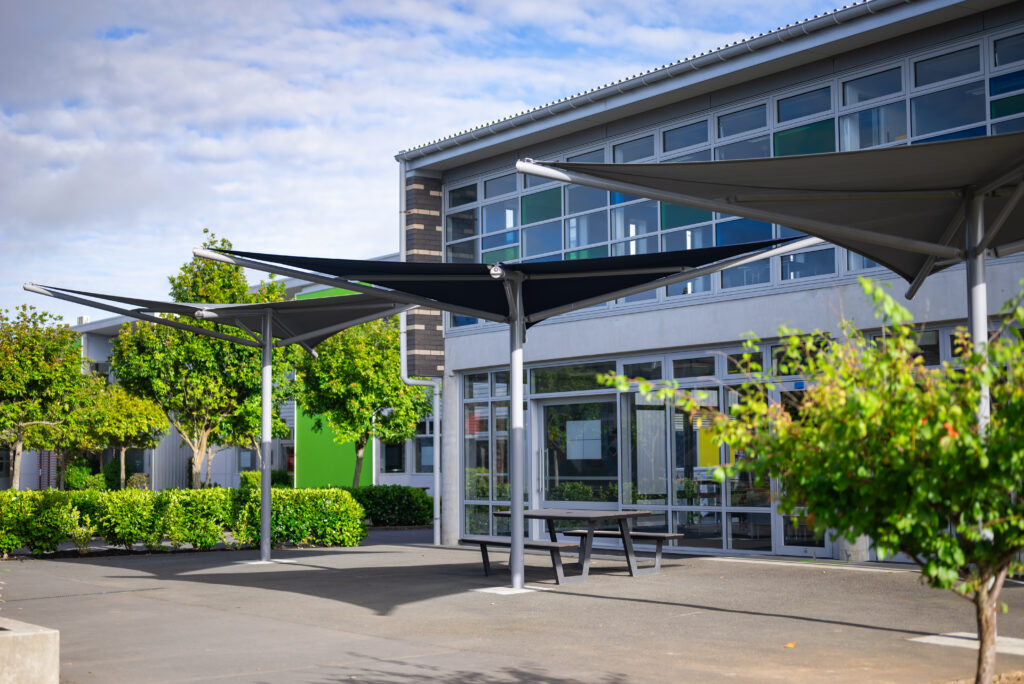
“Shade sails provide flexible coverage for playgrounds and open spaces, with modern designs that incorporate structural steel supports, anti-climb poles, and independent footings for safety and long-term durability.
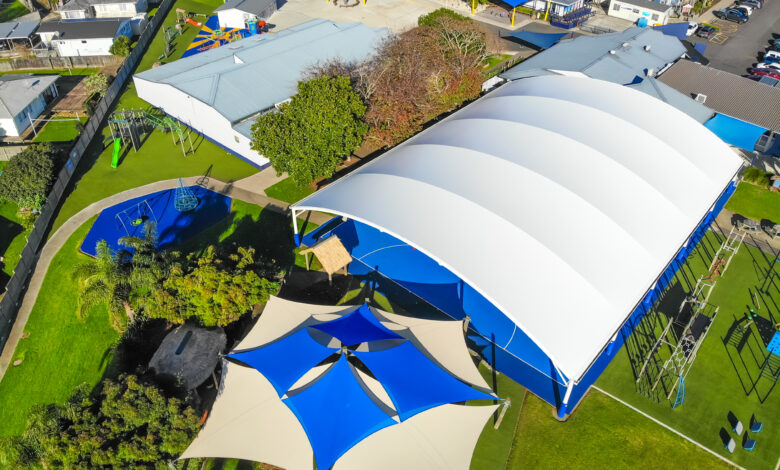
“Tensile membrane canopies offer large-span, all-weather protection—perfect for sports courts, assemblies, and outdoor learning areas.
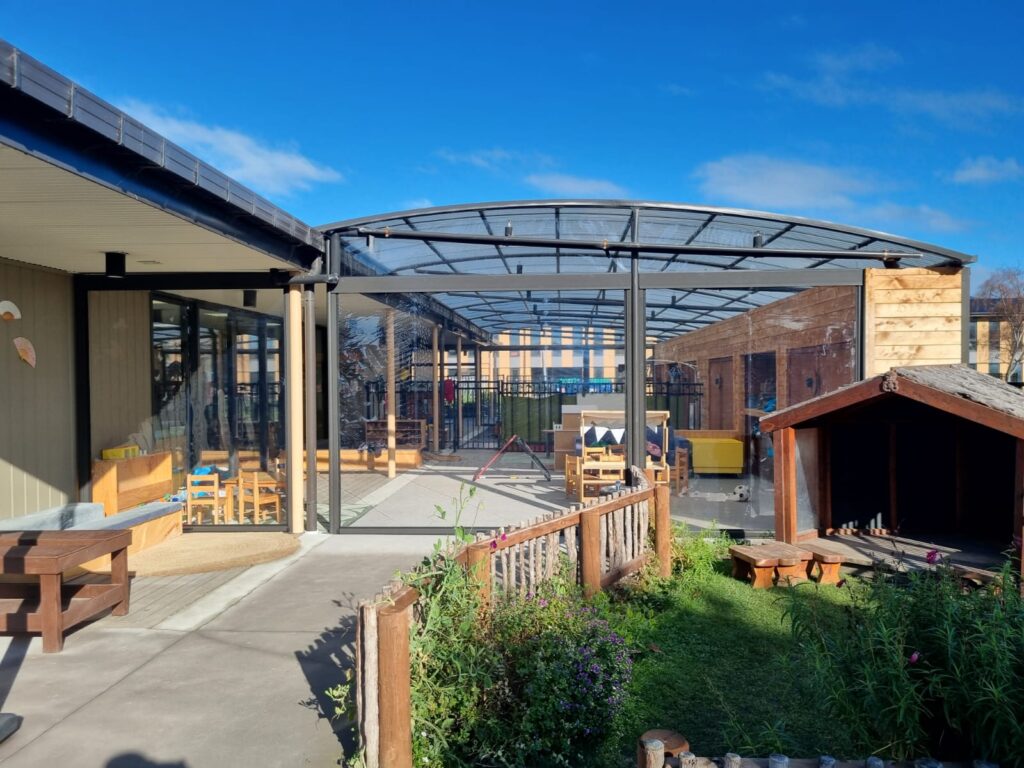
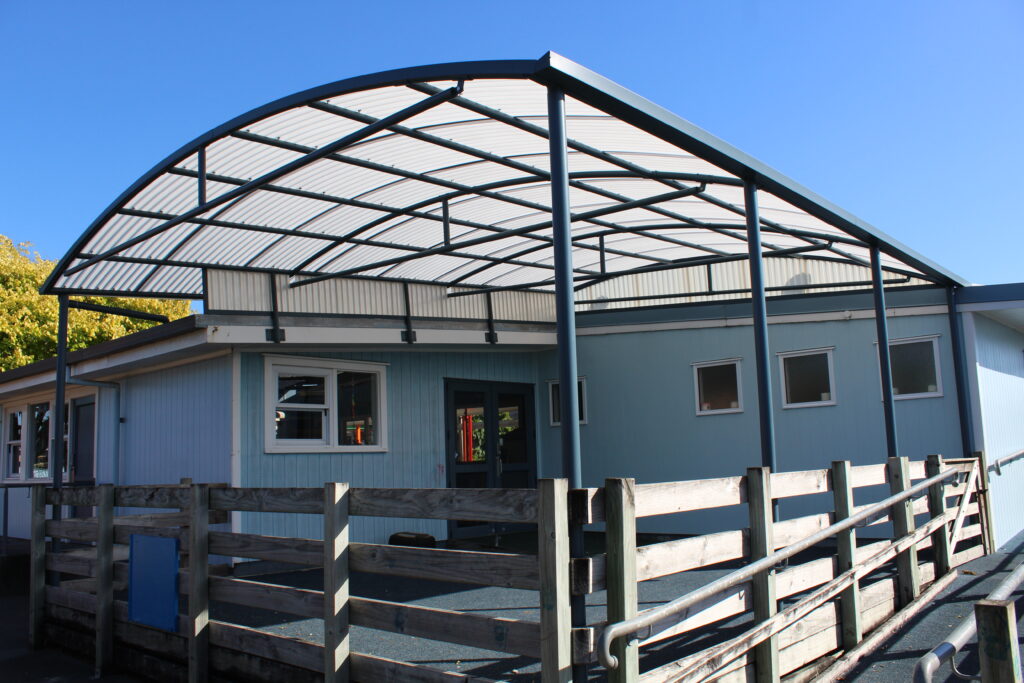
“Polycarbonate roofing delivers a hard-roof option ideal for covered walkways and outdoor classrooms.
“Modular shade structures work brilliantly for lunch areas, playgrounds, and other high-activity spaces.”
Working with an experienced shade structure manufacturer and installer can help you identify the best shade solution for your specific purpose. Some structures, like shade sails and umbrellas, can be customised to suit your school colours, or blend in with the existing landscape.
“Good shade design goes beyond just blocking the sun,” Mr Suckling said. “Factors such as UV protection, airflow, visibility, durability, weather resilience, and compliance with building codes all matter. Placement is key—structures should be positioned to maximise protection during peak UV times, integrate seamlessly with the site layout, and allow for safe installation. Partnering with an experienced provider ensures the design works as well in practice as it does on paper.”
Functional features
Myriad options are available for you to transform your shaded area into an outdoor classroom, entertainment hub, or sports precinct.
Shade structures can be fitted with IP Paging and PA systems, digital signage and lighting. With these added features, school assemblies and presentations, community events, incursions and much more can be hosted in these spaces.
Ms Evans said: “Outdoor Blinds extend the use of canopies, providing additional weather protection. These are available in either mesh fabric or clear PVC.
“The choice of mesh or clear depends on the main requirement of the space. Mesh fabric reduces glare and heat in the summer whereas the clear PVC offers greater weather protection.
“It should be remembered that areas under a canopy remain an outdoor space, and do not have the 100 percent weather protection of the inside of a classroom,” Ms Evans said. “Another aspect to consider with blinds is they operate best when the posts are not too far apart, so if you have a very wide-open space, blinds may not be as suitable.”
Shade on the go
Of course, there are some instances where installing a permanent shade solution just won’t work. For school sports days and carnivals, open days, and other outdoor events, portable shade options are available. These include marquees, gazebos and umbrellas.
Customised gazebos in house colours can help foster house spirit and friendly rivalry between opposing teams; school-branded gazebos can be used at community events to increase awareness of your school. Branded gazebos can also lend an air of professionalism to school events.
To get the most out of your potable shade, before investing, think about what it will be used for. Does it need to be suitable for concrete, gravel or grassed surfaces, and are the appropriate anchoring tools included? How many people will need to fit under it, and how many people will likely be on hand to set it up? Also make sure you have a suitable location to store portable shade structures while not in use.
Related School News article: Making your sport day memorable
The final word
Nick Suckling said the risks of not providing shade—UV exposure, reduced outdoor activity, and lost opportunities—far outweigh the investment in quality, purpose-built structures.
He warned against opting for low-spec or short-term solutions, that can end up costing more over time. “Overlooking engineering requirements, attaching to unsuitable structures, skipping consent processes, or placing posts where they block movement are mistakes that can lead to safety, compliance, and usability issues. Careful planning prevents these problems and keeps spaces open, safe, and functional.”