
Supporting all students to thrive in the classroom is at the heart of what all school staff do.
Whether that involves amending the physical layout of the room, adding sensory outdoor spaces, ensuring students have the technological supports they need or breaking down barriers to accessing literacy, it can be difficult to know how to best assist students with a wide umbrella of needs; School News has spoken to the experts to find out how to get started.
Read the latest print edition of School News online HERE
Clever classroom spaces
Adam Bazzard from Sensory Sam said that classroom furniture and larger objects can actively shape a supportive classroom by creating spaces that meet students’ sensory, emotional, and learning needs.
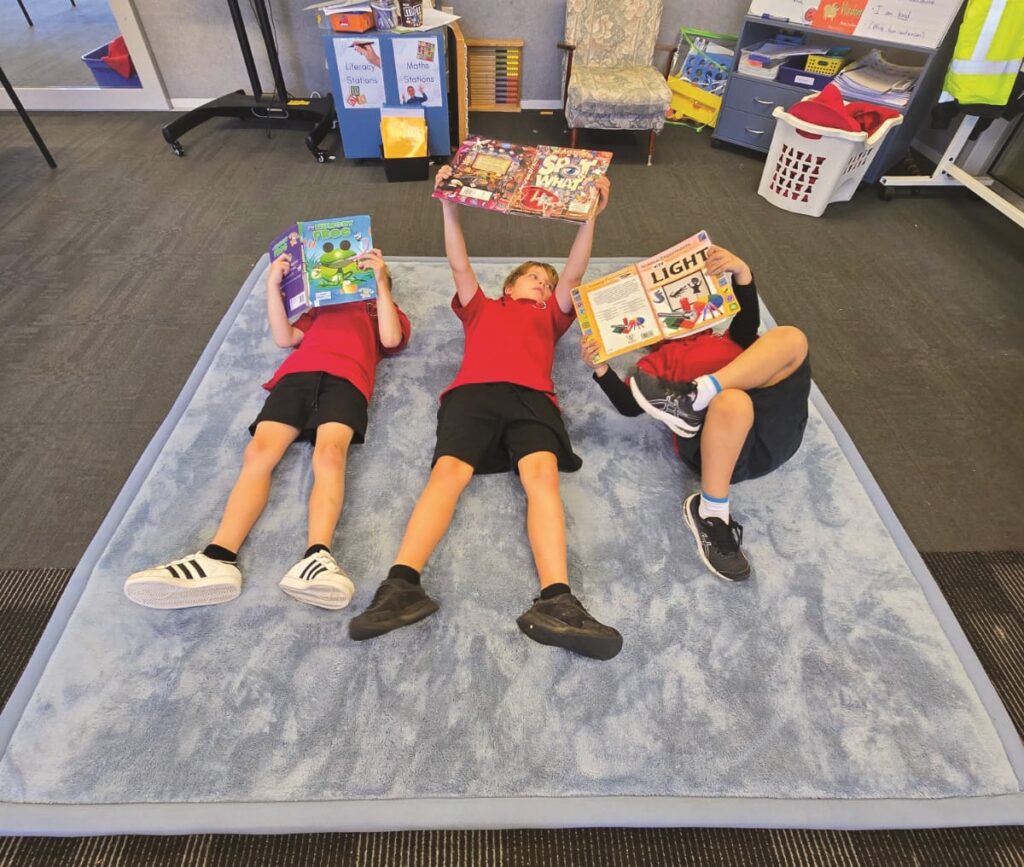
“For example, soft seating areas or “crash pad” corners give students a place to self-regulate when they feel overwhelmed.
“In smaller classrooms where space is a premium, blackout tents or “Zen zones” can provide a low-stimulation retreat where students can reset. Larger sensory equipment, such as swings, can also support regulation by offering movement, deep pressure, and vestibular input.
“Similarly, layering the classroom with comfortable materials makes the environment more inviting and accessible. Using bookshelves or partitions to create smaller nooks can also give students a sense of safety and containment while keeping them connected to the classroom.”
Mr Bazzard said all learners have individual preferences and sensitivities, and students with ADHD, ASD, or both are no exception.
“There is no single “right” tool—effective support comes from observing, trialling, and adjusting based on what helps each child focus, regulate emotions, and engage in learning.
“A practical approach is to use a shared sensory kete that can be used across classrooms.
“For learners with ADHD, tools that support sustained attention and manage restlessness are particularly useful. Some examples include quiet fidget tools, wobble cushions or alternative seating, and visual focus supports such as timers or checklists.
“For learners with ASD, sensory tools can help manage sensitivities and support emotional regulation. These may include weighted items, earmuffs and access to quiet spaces or rest zones.
“Many students with sensory processing differences may display ADHD-like traits such as fidgeting or impulsivity, or distraction and struggling with focus. Because of this, having a broad range of sensory tools is key. Equally important is how these tools are introduced and used. Clear expectations (for example, tools are for learning, not play), modelling their use, and normalising access for all students helps reduce stigma and ensures they are used effectively.
“Ultimately, the goal is to create a flexible, inclusive environment where all students—regardless of neurotype—have the support they need to feel safe, regulated, and focused, to learn effectively.”
Engaging outdoor spaces
Abbey Hull, Playground Designer for Playscape, said that deliberately designed outdoor spaces fill a variety of roles and needs.
“In my experience collaborating with schools, I found that when outdoor spaces are intentionally designed with flexibility and open-ended play in mind, they naturally evolve to support both learning and play, as well as meeting individual student needs through a variety of interactive styles.
“Rather than treating the outdoors as one single, open area, the most successful designs break the space into purposeful, connecting spaces that respond to different learning styles and emotional needs,” she said.
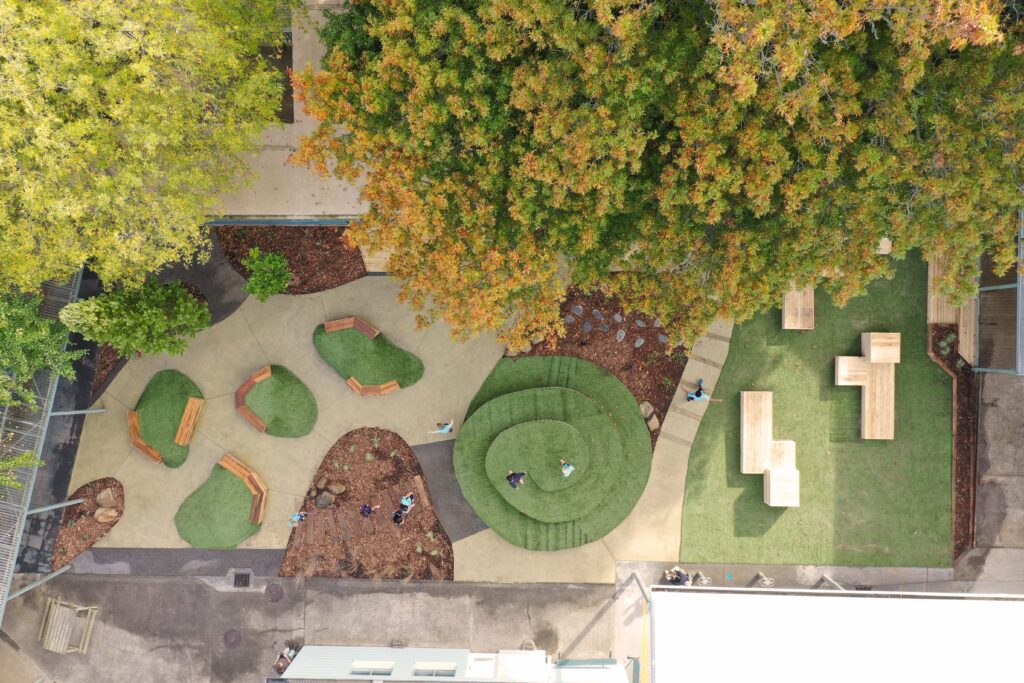
“These might include sensory zones for reflection and development, collaborative areas for group work and outdoor classrooms, and active spaces for play and exercise.
“When students have access to such a variety of options, they are better able to self-regulate, choosing environments that align with their cognitive or sensory needs. These breakout zones should seamlessly connect to the wider learning and play settings so they feel included and comfortable to explore.”
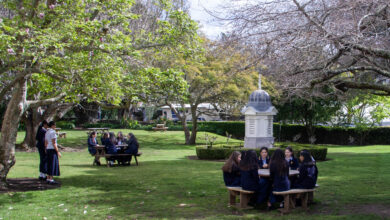
Ms Hull said that selecting inclusive outdoor furniture was just as important. “Designing for inclusivity requires careful consideration of the full range of student needs, including physical accessibility, sensory awareness, and different learning preferences.
“This might involve providing varied seating options at different heights, flexible configurations that accommodate both groups and individuals, and layouts that are accessible for wheelchair users.
“Material selection also plays a significant role in shaping inclusive environments. Natural textures and elements help connect children to their surroundings and can reduce sensory overload while still offering rich, tactile experiences.
“In most projects, I have integrated furniture directly into the landscape by using features such as log seating, boulders, terraced mounds, or land contours, so the environment feels cohesive, calming and inviting rather than overly structured.”
Related School News story: Take it outside: Outdoor learning for areas for year-round education
Sensory gardens can form an integral part of a calming environment, Ms Hull said.
“Sensory gardens can enhance outdoor learning by engaging multiple senses in a balanced and intentional way. Choosing the right planting is crucial, whether the goal is to attract pollinators or grow edibles for hands-on learning, or establish hardy, low-maintenance greenery that can withstand curious hands and higher traffic.
“Layering planting types such as soft grasses, fragrant herbs, flowering species, and textured foliage can create an immersive experience that changes with the seasons. Thoughtful placement is key, ensuring quieter sensory areas are gently buffered from high-energy play zones, allowing students who may feel overwhelmed to retreat and reset.”
Breaking barriers to learning
Providing equitable access to education for all students begins with deliberately identifying and removing or minimising barriers to learning and wellbeing, said Deborah Grover from the IT Education Company New Zealand (ITECNZ).
“Until recently, identification of specific learning differences relied on educational psychology assessment; a costly barrier to schools and whānau that therefore compromised equitable access to identification.
“School awareness and engagement with science-led information about learning differences has improved and so has accessibility to evidence-proven standardised assessment tools, ones that identify specific learning differences as well as strengths and challenges to drive instruction.
“Responding equitably to diverse learning needs requires a tiered assessment plan (such as Response To Intervention, or RTI) for early identification, so as to map to a tiered approach to responding to needs, which is becoming more prevalent in New Zealand schools.
“Schools should look for assessment tools that are adaptive, standardised and have at least a 90 percent confidence band, to ensure early identification is based on robust evidence,” Ms Grover said.
“Best assessment practice based on the RTI framework will ensure learning needs are able to be met in an inclusive learning environment because individual learning needs have been appropriately identified in the first instance.
“Digital programmes, for example for maths and literacy, that include adaptive scaffolding, enable students to work at their own level and pace and within the classroom. This feature can greatly assist teachers by automatically targeting specific student needs, while allowing those who are ready to move on to accelerate.
“The best programmes provide teachers with easy to access student progress data that not only identify specific student needs, but also provide support resources designed to help educators support those needs.
“A successful implementation would most likely dedicate set in-class time for student engagement with programme lessons, alongside the teacher checking in with students who need it most.”
Related School News story: Support for cultural identity a key factor for school satisfaction
Helping students love literacy
When it comes to literacy, schools should look for approaches that recognise that students present with varying profiles of strength and need, and that provide resources and strategies to tailor teaching, said Associate Professor Sally Clendon from Better Start Literacy Approach.
“Students with complex communication and learning needs will often have difficulties across phoneme, phonics and language aspects of literacy, so a comprehensive approach that provides explicit instruction in all areas needed for success is key.
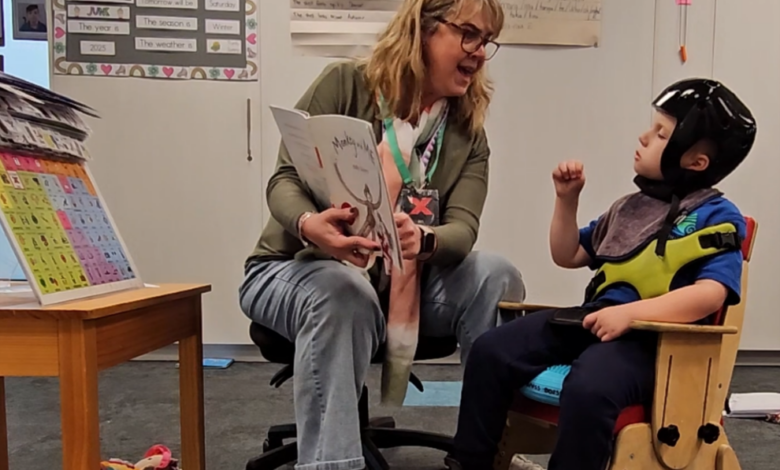
“Assessment and teaching resources should consider a range of student needs including communication access. Often, for example, reading assessment has relied heavily on students reading aloud which is not possible for students with complex communication needs. These students are unable to use spoken language to meet all of their communication needs and instead require access to augmentative and alternative communication (AAC) systems.
“It is important that these students have access to language and literacy assessments that do not require a spoken language response.
“It is also important that teaching teams know how to incorporate students’ AAC systems into their literacy teaching as we know that building a strong language foundation is key to optimising literacy success for these students.”
Instructional approaches that consider a wide range of learner profiles mean that all students are represented, said Associate Professor Clendon. “Key components of a structured literacy approach such as explicit teaching, systematic instruction, and just-right scaffolding are key.
“However, another important consideration is ensuring all students including those with the most emerging communication, language, and literacy skills have a space and place on that learning journey.
“The Ministry of Education’s He Tūāpapa o He Pikorua provides a framework for reflecting on the universal, targeted, and tailored supports that students may need and the importance of alignment between these various layers of support.
“Approaches that represent and include all students and facilitate alignment between targeted and/or tailored support and whole-class universal teaching help to create inclusive classrooms.”